
Pink Hair Has Always Been the Ultimate It Girl Beauty Risk
By Alexus Mosley
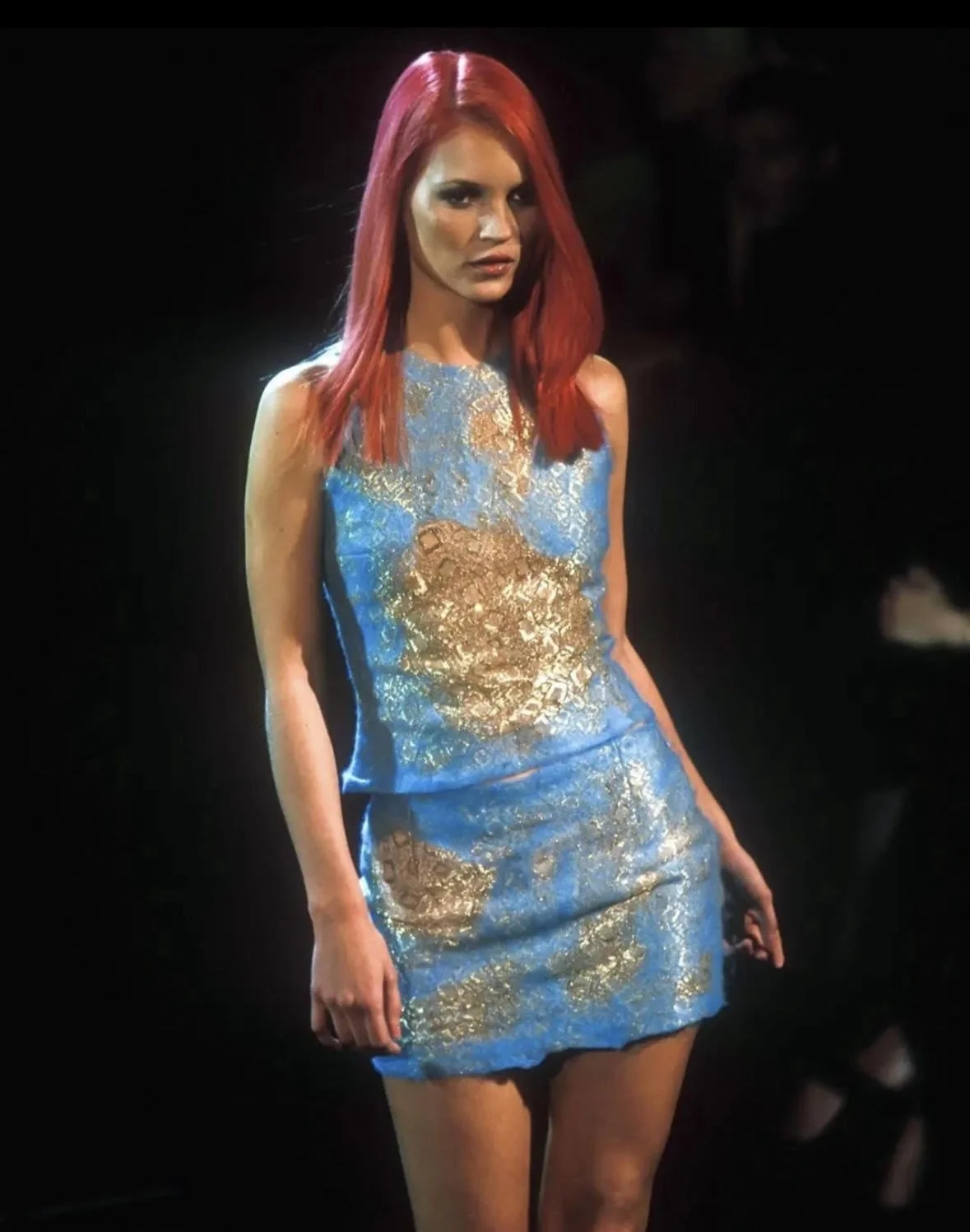
Kate Moss walking in the Versace Spring/Summer 1999 fashion show in Milan
Every era has its blonde bombshells and brunette femme fatales. Still, there’s something almost symbolic about the women in pop culture who emerge with pink hair, as it rarely belongs to a background character. Pink hair has never been for the timid. Sure, every few years the idea re-emerges as a “trend,” partly due to Barbiecore flooding our timelines and pastel wigs becoming commonplace on TikTok, but very few go through with trying it.
For decades, beauty culture has treated pink as contradictory. It’s associated with softness and girlhood, yet pink hair is rarely perceived as “safe.” In fact, it’s one of the boldest beauty choices a woman can make. It’s hard to be coy when walking into a room with cotton-candy waves, a pastel bob, or neon-colored curls. And that is because pink hair belonged to a very specific kind of woman. The kind who wanted to be seen and remembered years later. Frozen in time with Tumblr moodboards, posters pinned to teenagers’ bedroom walls, and immortalized in fan edits.
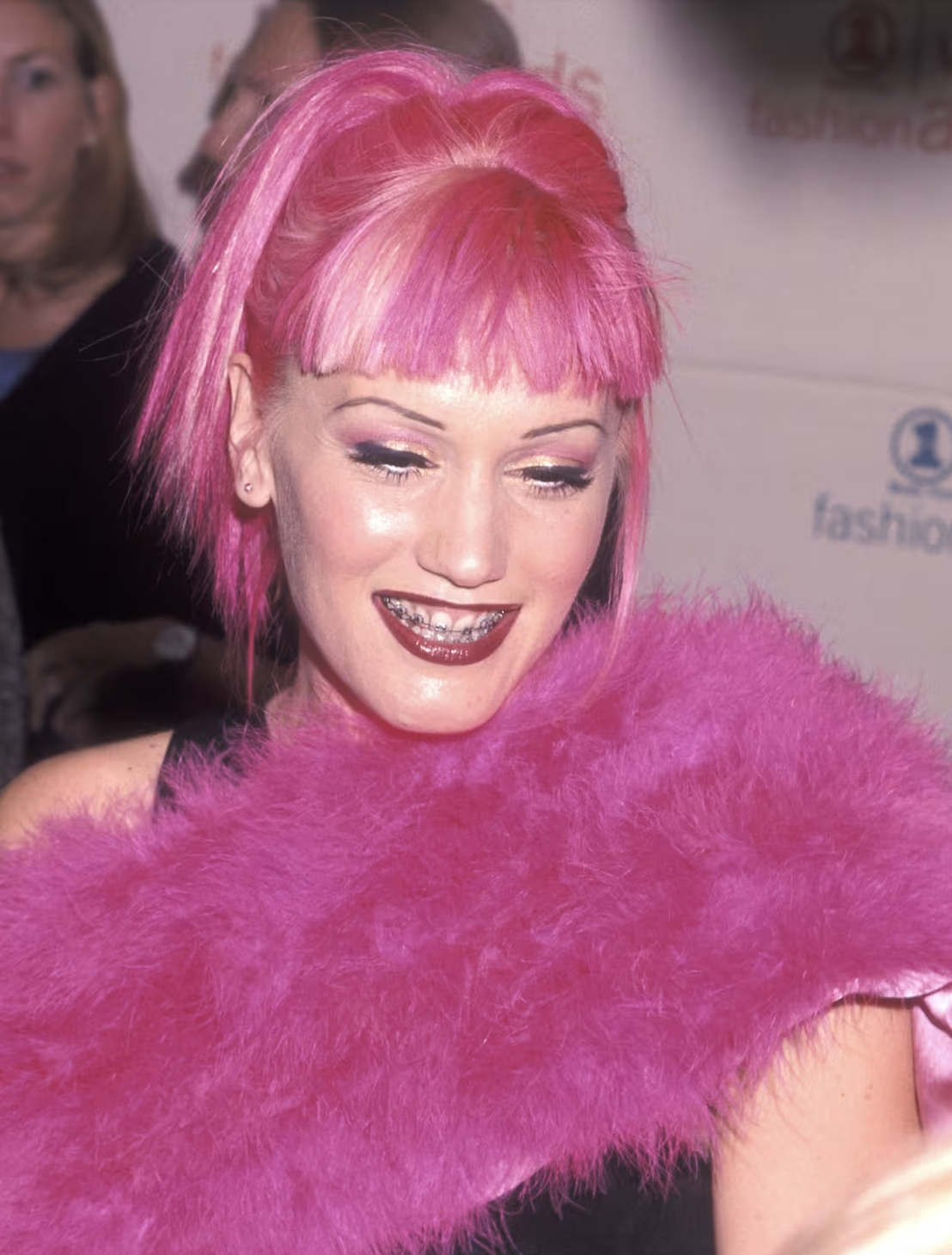
Gwen Stefani at the 1999 VH1/Vogue Fashion Awards
Though rarer, pink hair has remained such an enduring beauty statement, announcing itself and instantly transforming a woman into a character, but not in a costume-y sense. And maybe that’s why it has become such a recurring symbol of the It Girl archetype across generations. Arriving at the party becomes making an entrance. The edgiest woman is seen through a softer hue, while one who society deems as hyper-feminine is now assumed to be a bit rebellious. That is softness met with spectacle or sweetness with danger.
In September 1998, a young Kate Moss shocked the industry when she famously catwalked down the runway for the Versace Spring/Summer 1999 show in Milan, debuting her tresses with a neon shade of pink. Though the superstar model only kept the color for a week, the moment cemented her into the It Girl Hall of Fame, and still, we rave about it nearly three decades later. Kate Moss revived her iconic pink hair in 2022 for a Marc Jacobs campaign and set the internet ablaze.
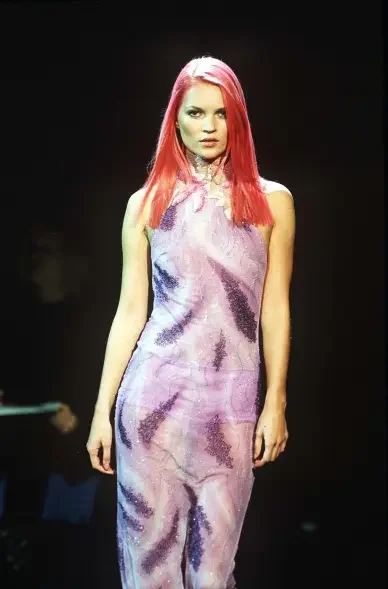
Kate Moss walking the runway for the Versace Spring/Summer 1999 show
Signaling pop-star energy at its most deliciously chaotic, throughout the 90s and 2000s, Lil’ Kim is widely regarded as the Pioneer of Colorful Hair in the Hip-Hop community. The rapper, songwriter, and style icon treated hair color like performance art, embracing bright, playful shades long before the beauty industry caught up. But arguably her most notable beauty moment happened at the 1999 "Rock Style" Met Gala, where she became the first female rapper invited to the event. Making history as the first female rapper invited to the event, she wore a custom Versace Haute Couture Fall/Winter 1999-2000 look, featuring a pink full-length coat, snakeskin boots, and, of course, a matching pink wig with multiple shades.
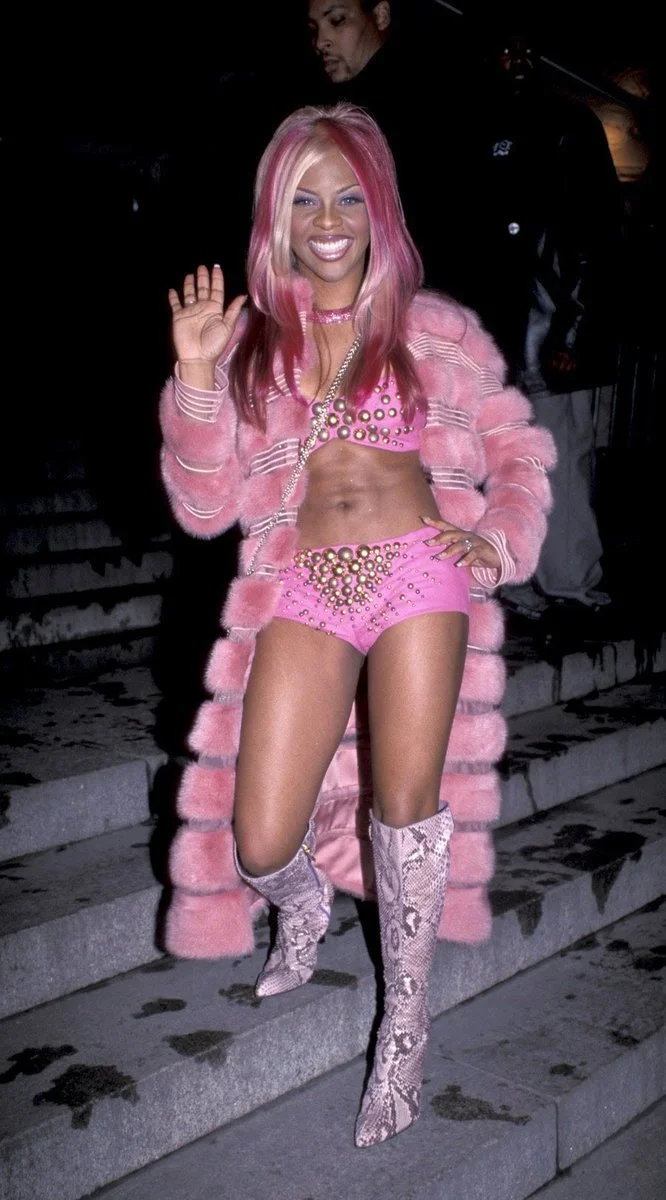
Lil' Kim at the 1999 Met Gala
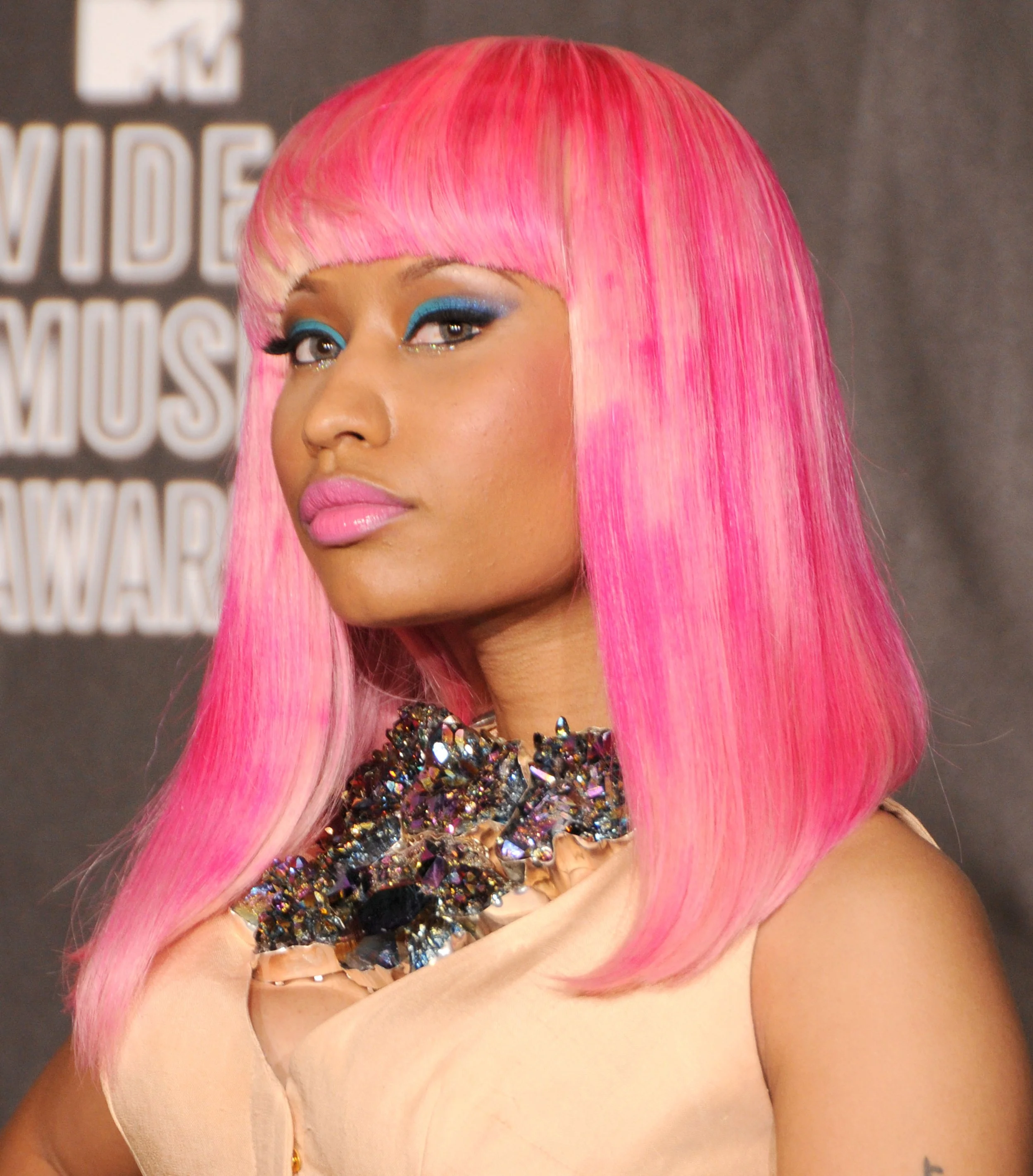
From Gwen Stefani to Nicki Minaj, who arguably transformed pink hair into an entire visual universe with bubblegum wigs and anime-inspired fantasy, it has evolved from something only emo teenage girls with a garage band have the guts to do, into an avant-garde world-building accessory. And every shade seems to represent a different type of femininity. Rihanna’s pink pixie cut courtside at the Los Angeles Clippers NBA playoff game in 2014 made it cooler and sharper, while, as of late, multitalented Houston native rapper Monaleo has used dusty rose pink as a staple in her “Black American Princess” branding that blends themes of emotional vulnerability as well as cultural pride.
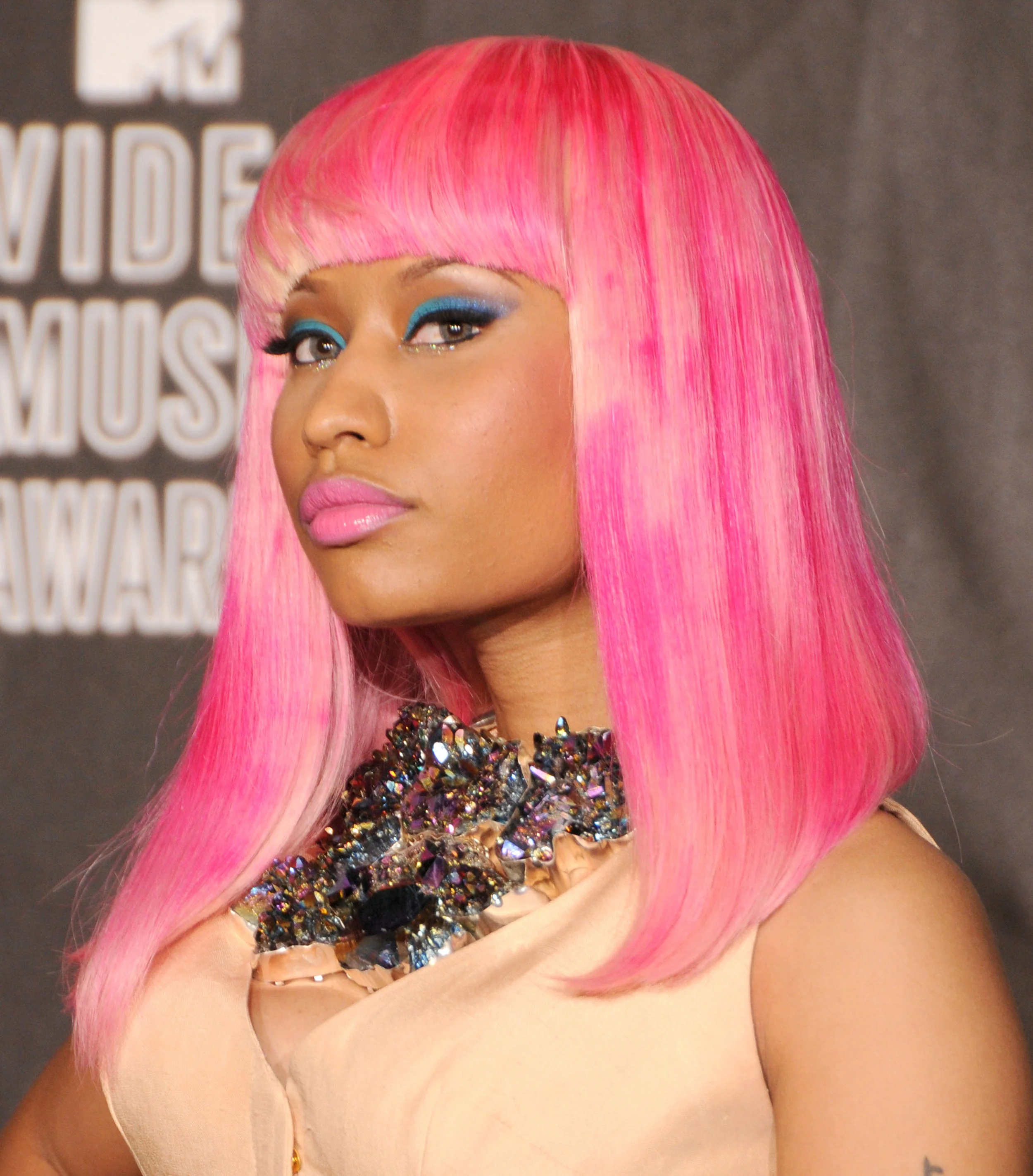
Nicki Minaj at the 2010 MTV Video Music Awards
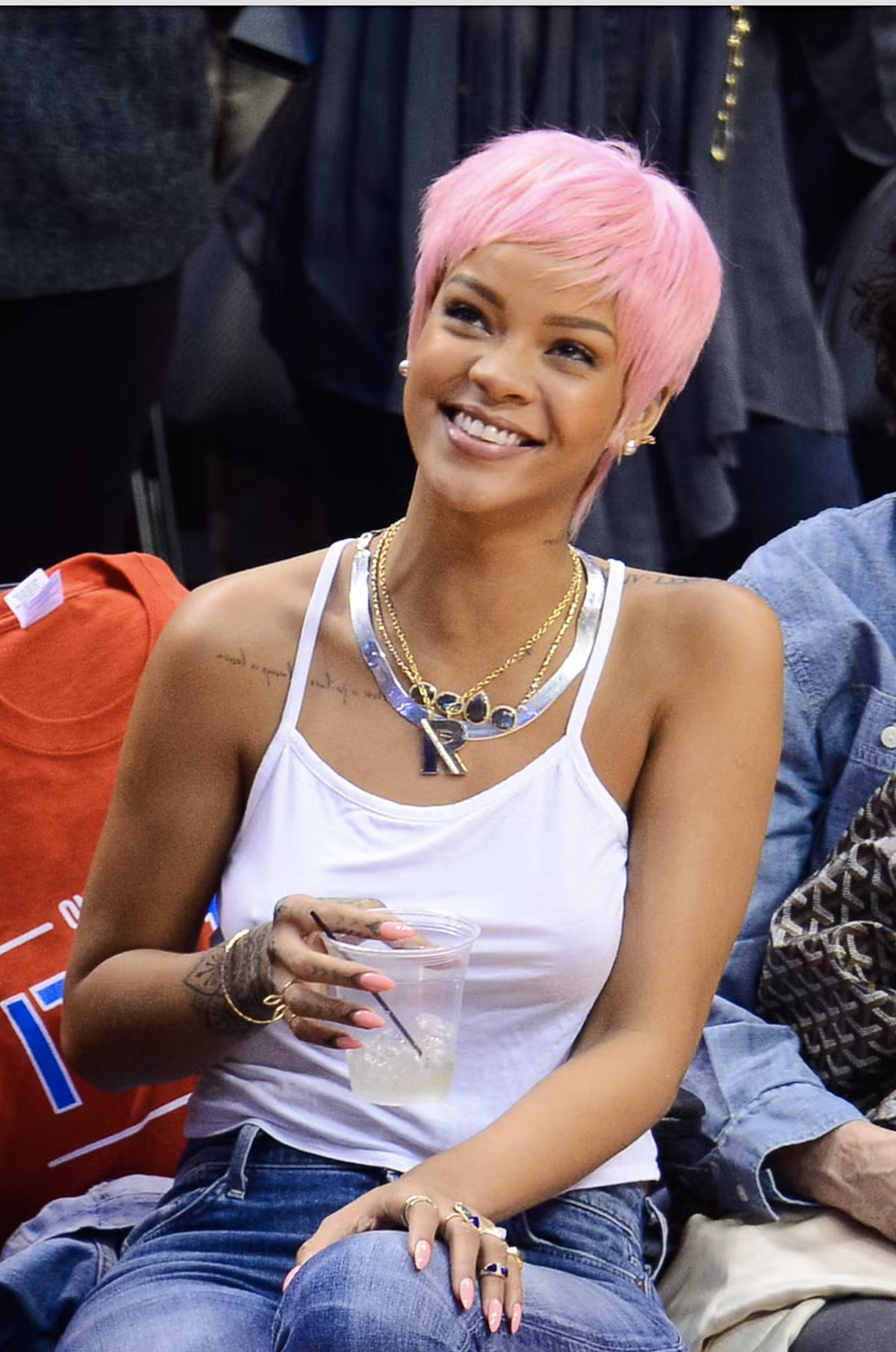
Rihanna courtside at Staples Center in 2014
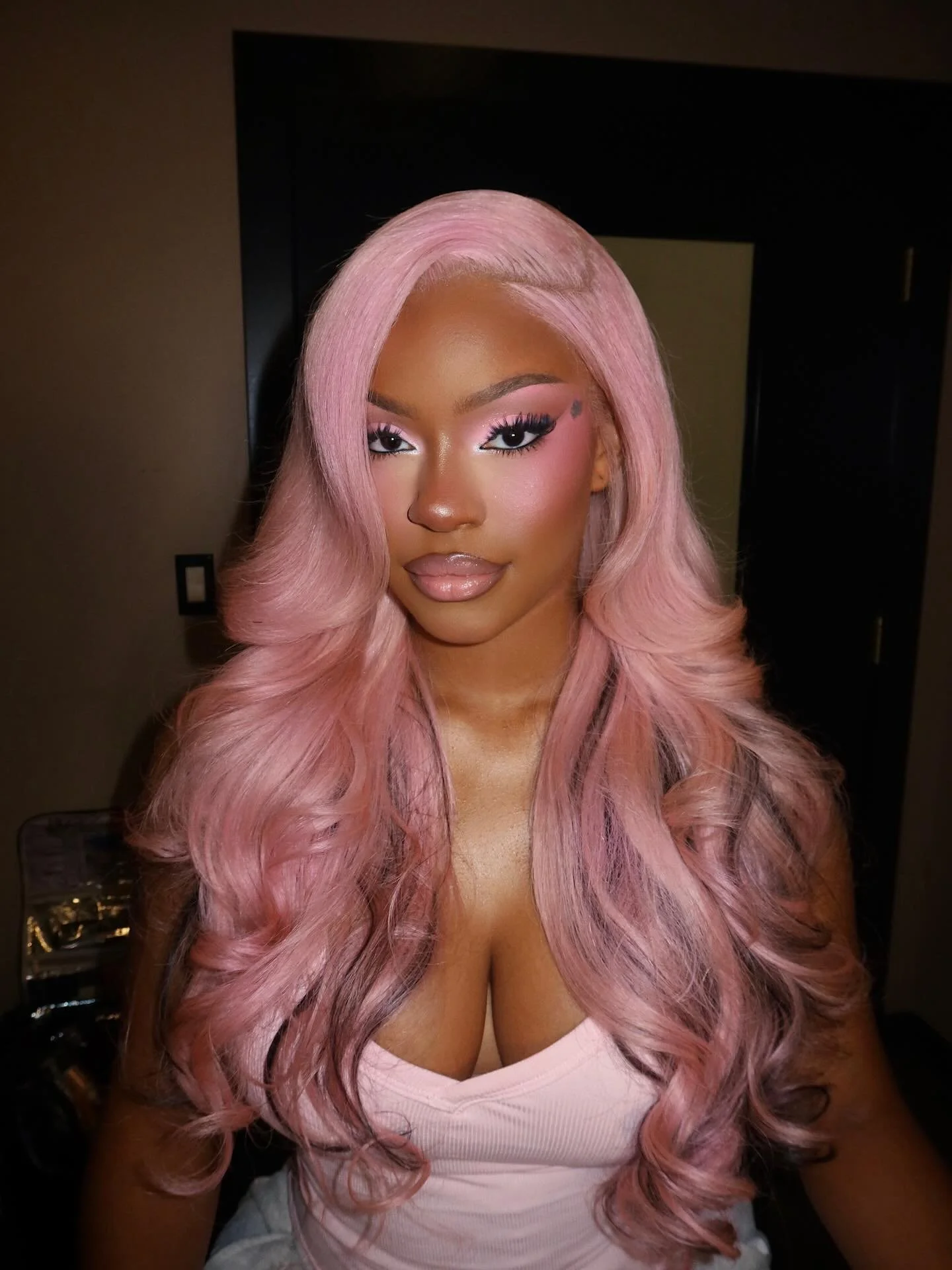
Rapper Monaleo via Instagram
That’s the interesting thing about pink hair. It’s simultaneously associated with girlhood, glamour, rebellion, dolls, romance, pop stardom, hyper-femininity, and internet-era self-expression. It demands maintenance, confidence, and a willingness to stand out. Maybe because pink itself occupies such a strange place culturally. It manages to never lose its charm. Even now, in the middle of our nostalgia-obsessed beauty era, pink hair continues to symbolize transformation. One celebrity debuts a blush-toned pixie cut, and suddenly the internet starts romanticizing reinvention all over again.
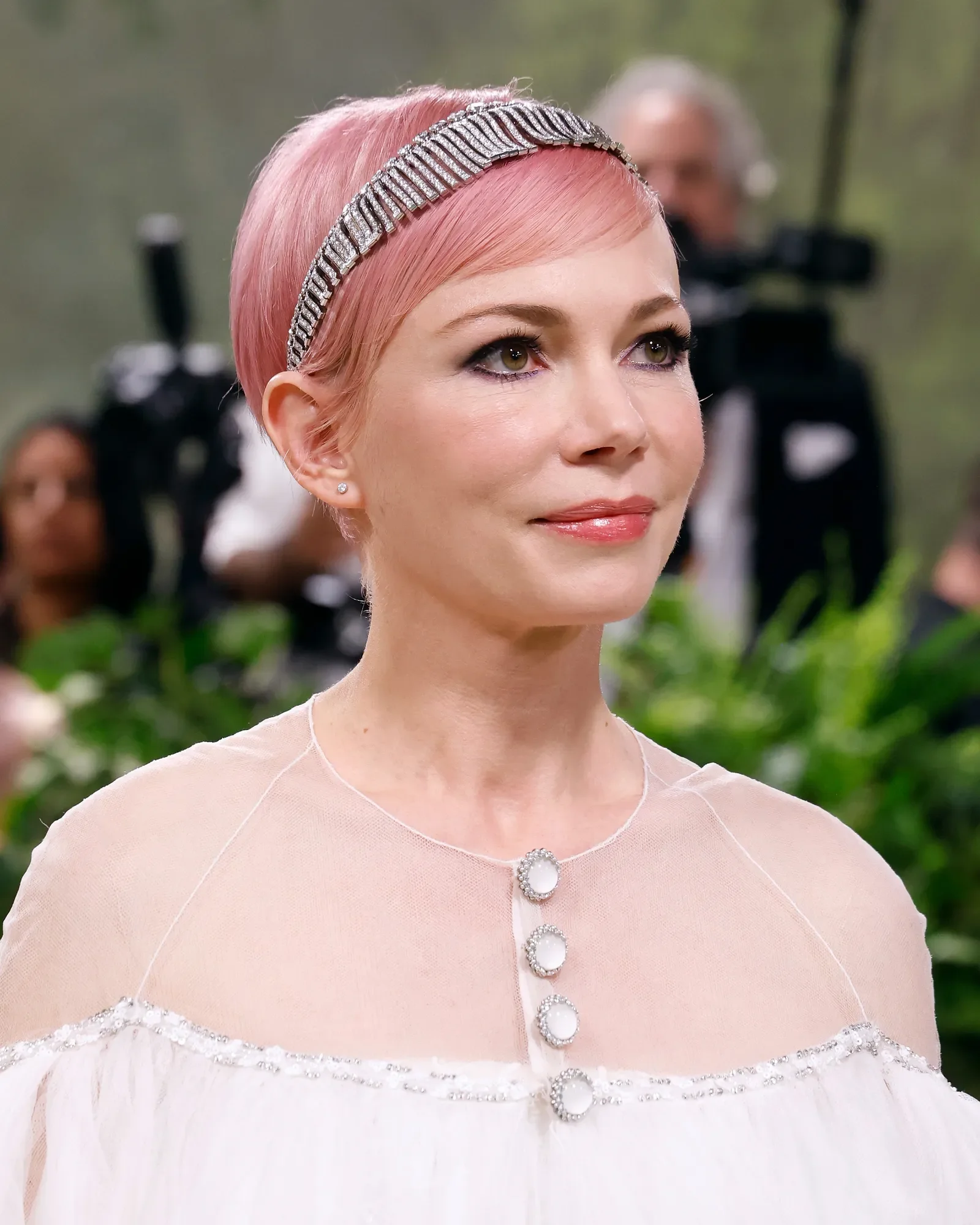
Michelle Williams attended the 2024 Met Gala
Because deep down, pink hair has never just been about hair, but about transformation, becoming slightly more daring, dreamlike, and ultimately unforgettable.