
Before It Was an Aesthetic, Preppy Was a Password
The Uniform That Refused to Stay in Its Lane
By Alexus Mosley
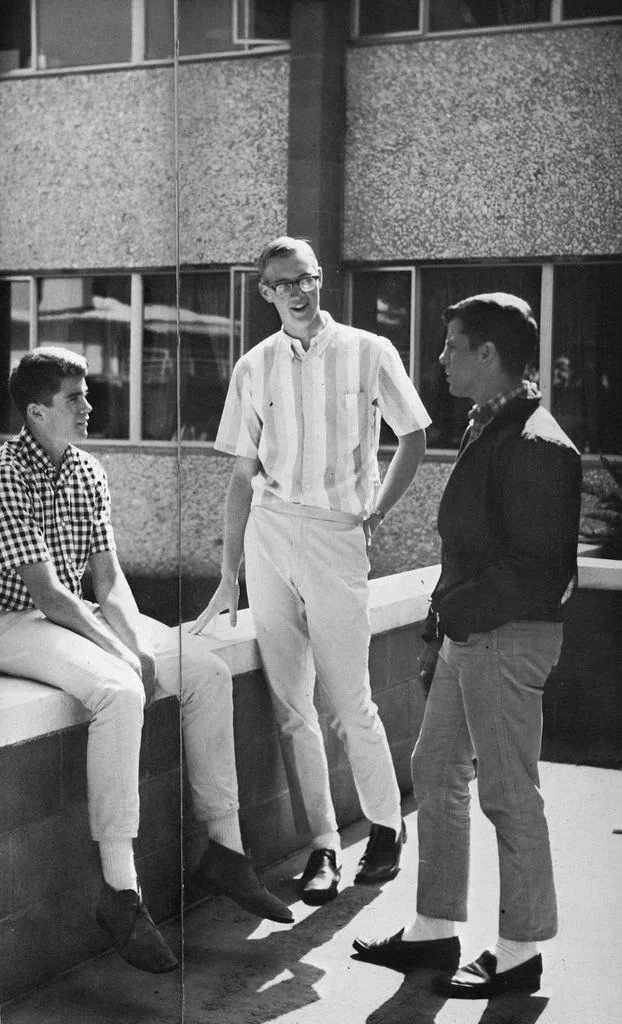
Lou Mackey, Joe Gugliotta, and Tom Eberhardt photographed in front of the Goshen post office (August 23, 1964).
Before it was an aesthetic, preppy was a password. Much like a sartorial handshake between a very specific class of people. The Northeastern elite, old-money families, and Ivy League campus crowd who didn’t need to announce their status because their clothing did it for them. For decades, a style choice such as a cable-knit sweater tied around the shoulders was a signal meant only for certain people to receive
The origins of preppy fashion trace back to the preparatory schools like Phillips Exeter, Andover, Choate, that fed into the Ivy League universities in the early twentieth century. These institutions had dress codes, and those dress codes became culture. Oxford shirts, khaki trousers, penny loafers, and blazers with crests were staples, and the color palette was intentionally restrained. Navy, white, forest green, camel, and the occasional burgundy were shades that were permitted because they weren’t loud, nor did they try too hard. Anything that tried too hard was, in itself, a class violation.
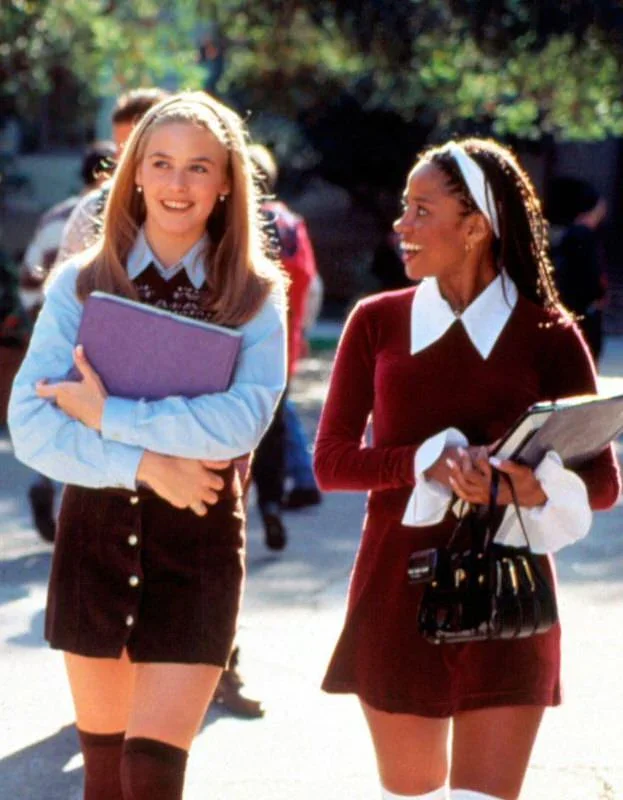
Cher Horowitz and Dionne Davenport in Clueless (1995).
The look was codified and sold back to itself through a handful of institutions that understood exactly what they were selling. Brooks Brothers, founded in 1818, was already dressing American presidents by the time preppy aesthetics fully crystallized in the mid-twentieth century. L.L. Bean supplied the duck boots and the canvas tote, while Lacoste contributed the polo shirt with the crocodile logo, small enough to be subtle, but recognizable enough to matter. These were not just fashion brands in the contemporary sense, but also heritage suppliers to a particular world.
In 1980, award-winning journalist and cultural commentator Lisa Birnbach published The Official Preppy Handbook, doing something quietly radical. She turned an unspoken class code into a consumer manual. Suddenly, the insider uniform had an instruction guide, and anyone could read and replicate it. The gatekeepers had been outmaneuvered by a paperback. The book was written as satire, but it was consumed as an aspiration, selling over a million copies. It told readers exactly which brands to buy, which schools to name-drop, and what vocabulary to adopt. For the old-money establishment, this was faintly horrifying. The whole point of the code was that you weren’t supposed to need a guide. You were supposed to already know. But democratization, once started, doesn’t stop at the door. And preppy was about to be taken somewhere its originators never anticipated.
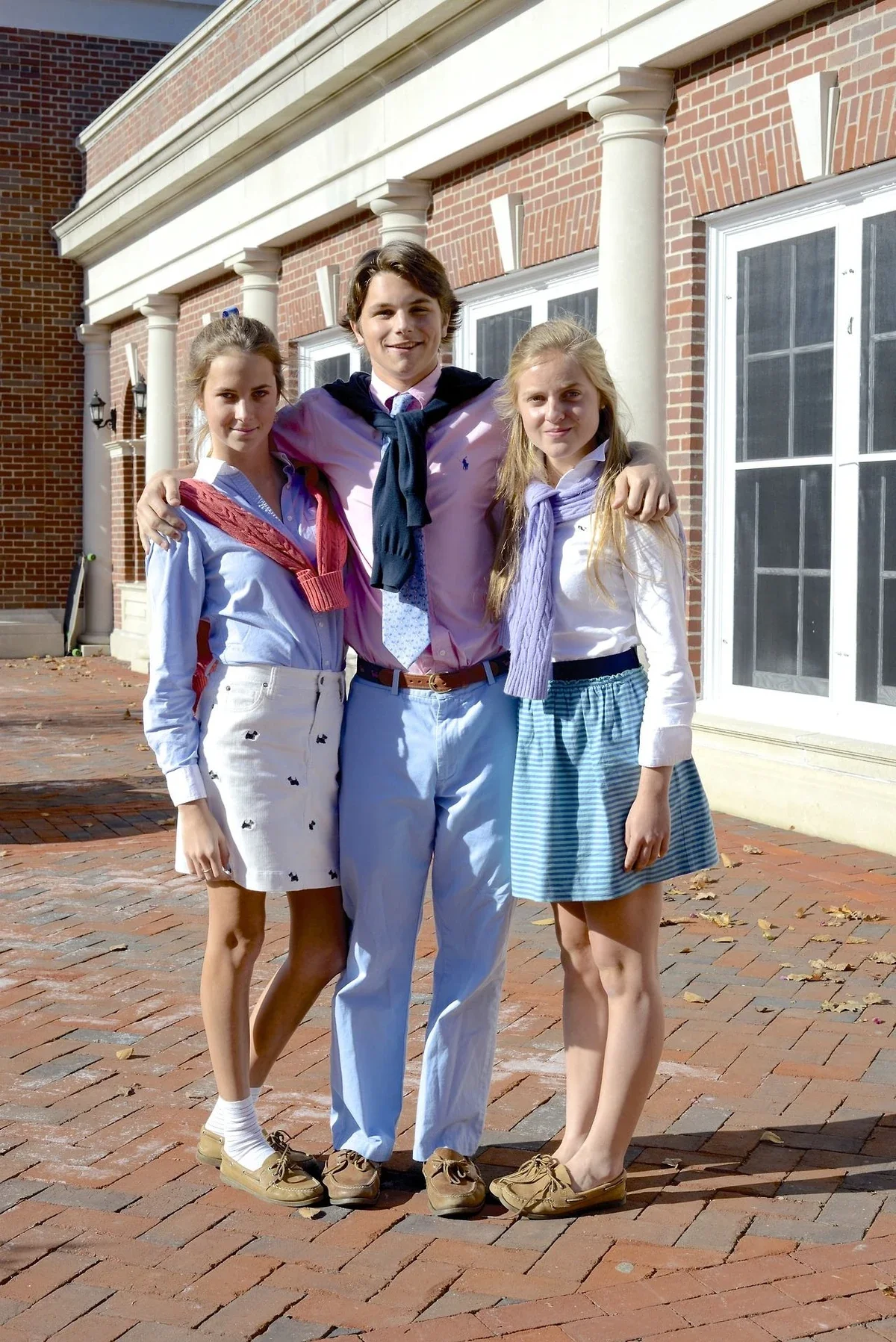
No figure in fashion understood the aspirational power of preppy more precisely than Ralph Lauren. Born and raised in the Bronx, Ralph Lifshitz was the son of Jewish immigrants and someone for whom the Ivy League world was entirely fictional. And that distance and outsider’s clear-eyed view is exactly what made him brilliant at selling it. Lauren mythologized the preppy uniform, building entire worlds using the Hamptons estate, the Montana ranch, and the English country house as a guide before selling people entry into those worlds through clothing. Launched in 1967, the Polo Ralph Lauren brand understood that the dream of the “Old Money” life was more powerful than the actual life itself. So he sold the image.
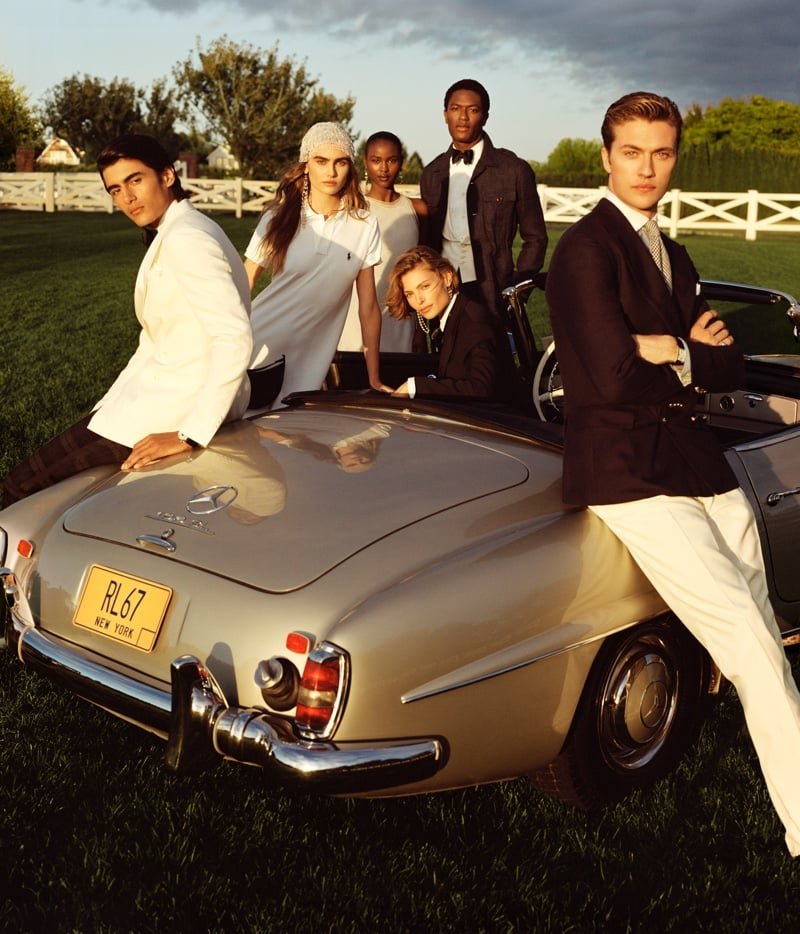
Ralph Lauren Spring 2025 campaign
By the late 1980s, something remarkable was happening on the streets of New York City. The Lo-Lifes, a Brooklyn-based crew of young black men, had adopted Ralph Lauren’s Polo line, but not as a full aesthetic takeover. They wore head-to-toe Polo and treated it as a type of currency, elevating it into a subculture with its own codes and hierarchy. Reinterpretating it, the Lo-Lifes took a brand built on the fantasy of old white America and wore it in a way that was harder, more layered, more alive than anything its creator had imagined. They understood that once an image is released into the world, it belongs to whoever wears it best.
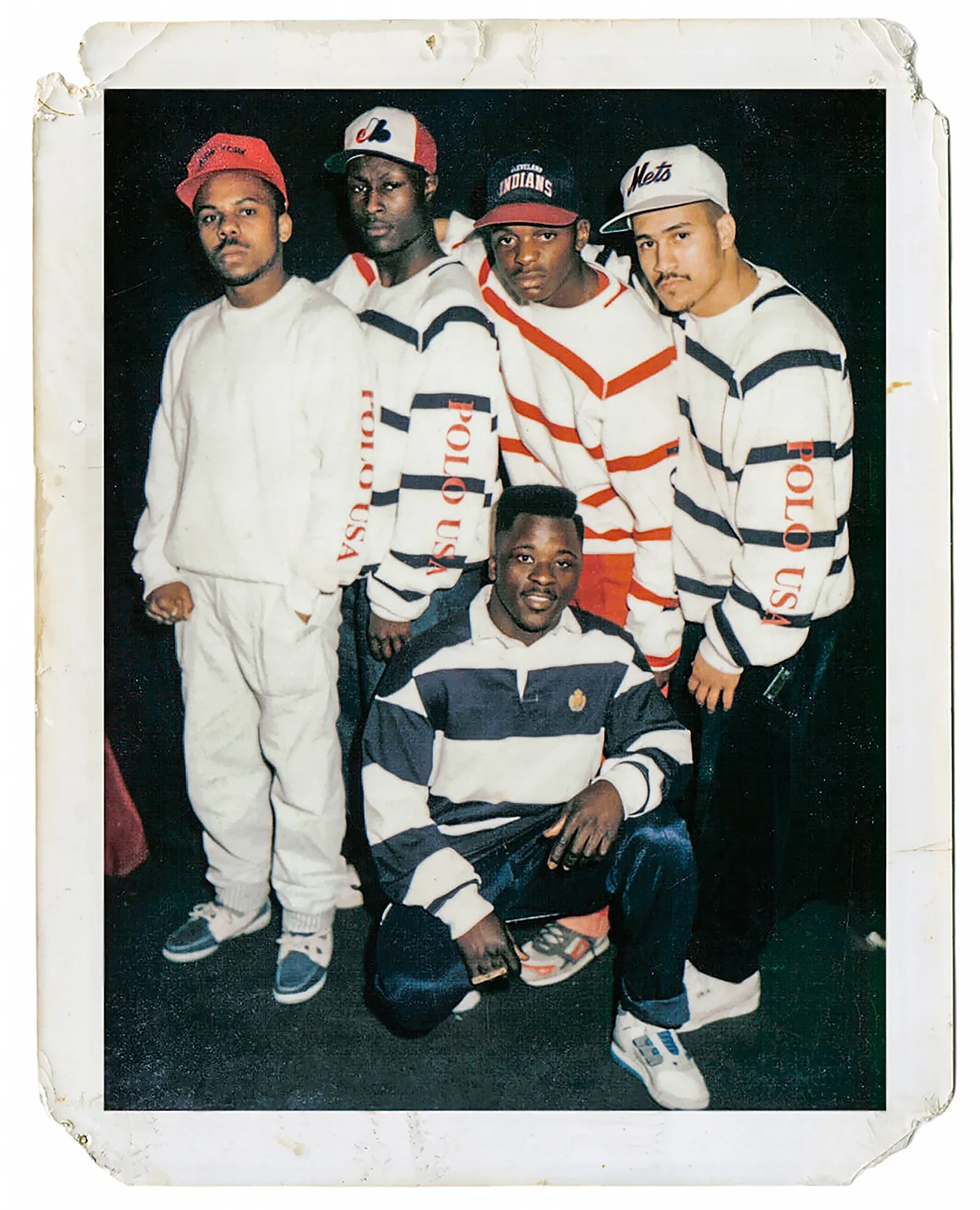
The "Lo-Life" crew photographed by Jamel Shabazz (1992).
The Lo-Lifes were the most extreme expression of something happening across hip hop culture in the 1980s and 90s. Tommy Hilfiger, another brand built on classic American sportswear, found itself adopted wholesale by hip hop. Aaliyah, Snoop Dogg, and others wore it on television and in videos, turning a preppy heritage label into a streetwear cornerstone practically overnight. The irony was exquisite. Labels designed to signal old-money restraint became symbols of a completely different kind of power. With youth, attitude, and cultural authority, Hip hop conquered preppy.
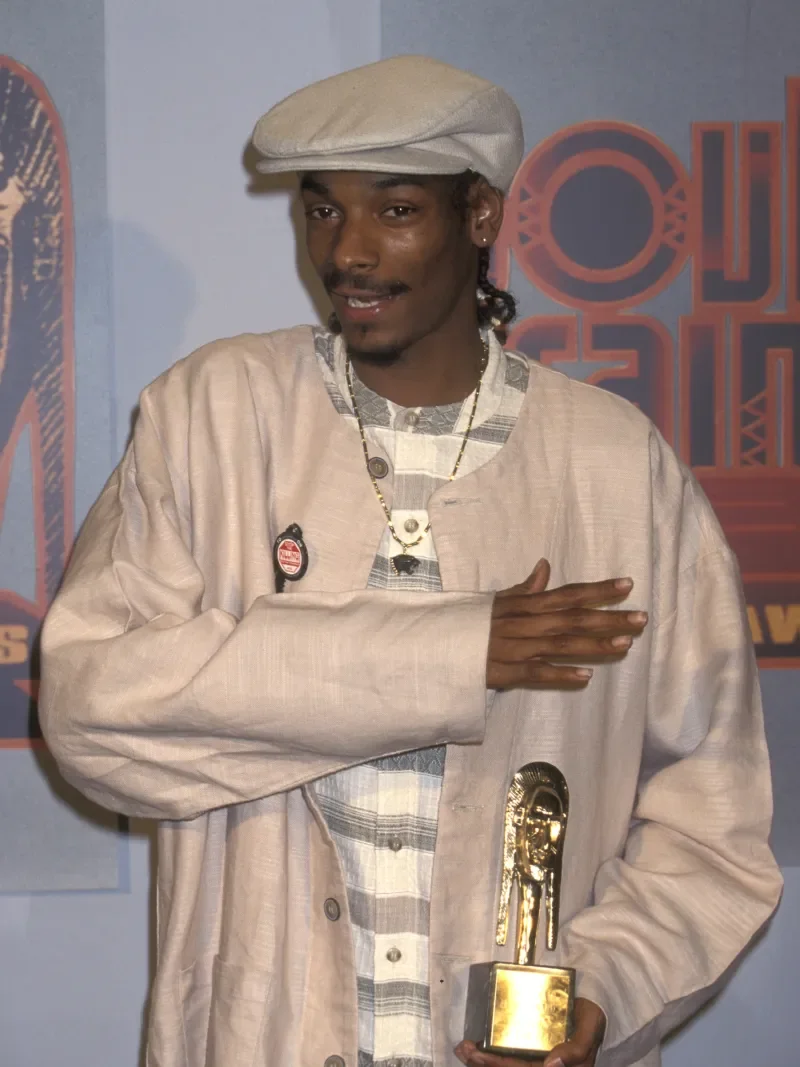
Snoop Dogg at the Soul Train Awards (1995) Photo Credit/Snoop Dogg
The story of preppy fashion is ultimately a story about what happens when a closed system meets a culture that refuses to respect its boundaries. The Ivy League establishment built a uniform to keep people out, not expecting an immigrant’s son to turn it into an American mythology or a paperback that blew the doors open. Then an entirely different America took it anyway and made it mean something richer, stranger, and more honest than it ever had before.
The cable-knit sweater, polo shirt, and loafer aren’t just clothes. What they mean has always been decided not by who made them, but by who wore them and why. That’s not a footnote to the history of preppy. That is the history of preppy.