
The Off-Duty Cool of Sofia Coppola’s Marie Antoinette Set
By Alexus Mosley
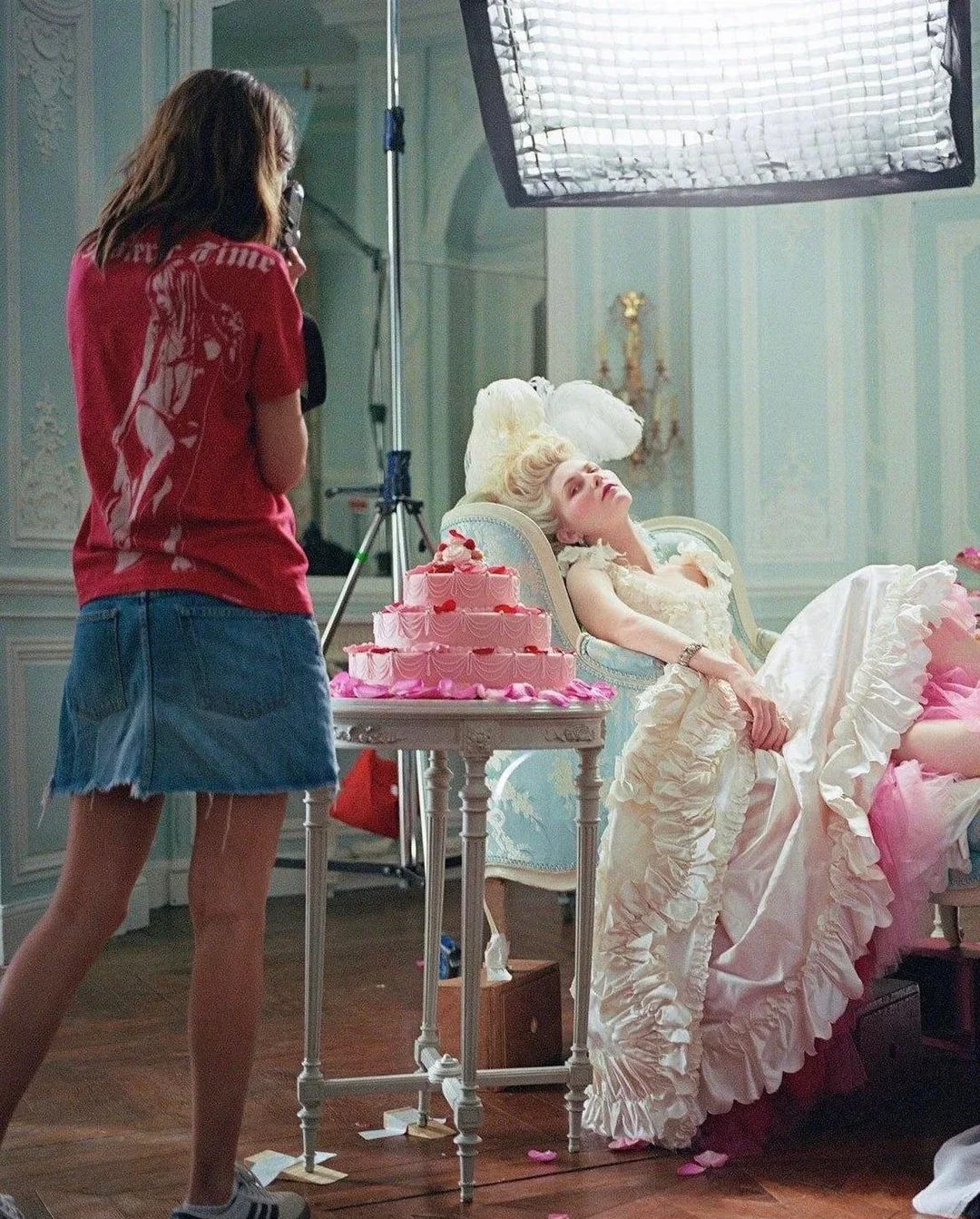
Photo Credit: Andrew Durham
Sofia Coppola’s Marie Antoinette gave us powdered wigs, pastel gowns, towers of pastries, and enough satin to upholster Versailles twice over. But some of the film’s most irresistible fashion moments never actually made it on screen.
The behind-the-scenes photographs from the 2006 film have developed a second life of their own, circulating across Tumblr archives, Pinterest boards and fashion moodboards years after the movie’s release. In them, Kirsten Dunst and the cast are still dressed like members of the 18th-century French court, but everything else feels completely modern.
A cigarette appears between perfectly manicured fingers. Sunglasses sit beneath towering hair. Actors lounge in folding chairs wearing corsets and silk. Crew members wander through Versailles while someone in an enormous panniered gown waits for the next shot. It is Rococo grandeur interrupted by off-duty cool. And somehow, that contrast feels just as Sofia Coppola as the movie itself.
Versailles, but make it casual. Part of the appeal is simply seeing all that extravagance treated so nonchalantly. While on screen, every gown feels precious. Every bow, jewel, and embroidered shoe belongs to the meticulously constructed fantasy of Marie Antoinette’s world. But behind the camera, those same clothes suddenly become work clothes.
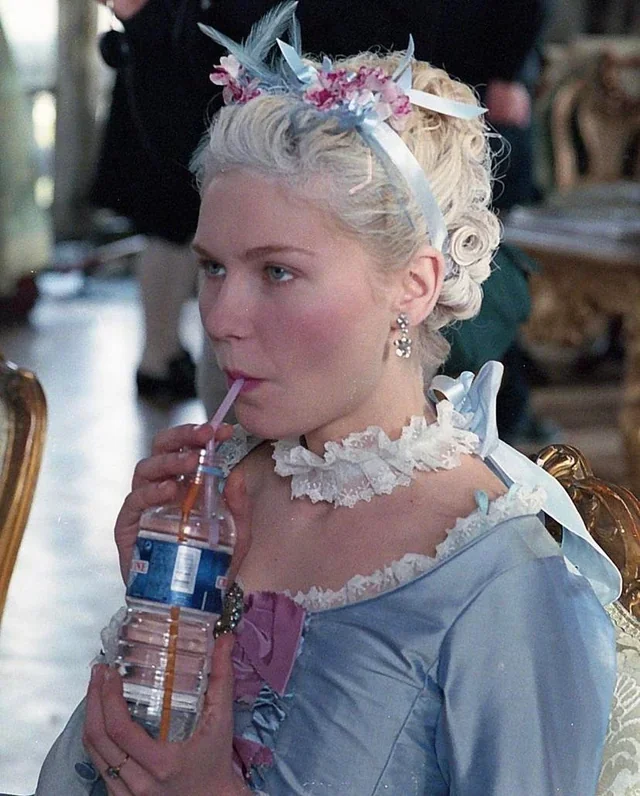
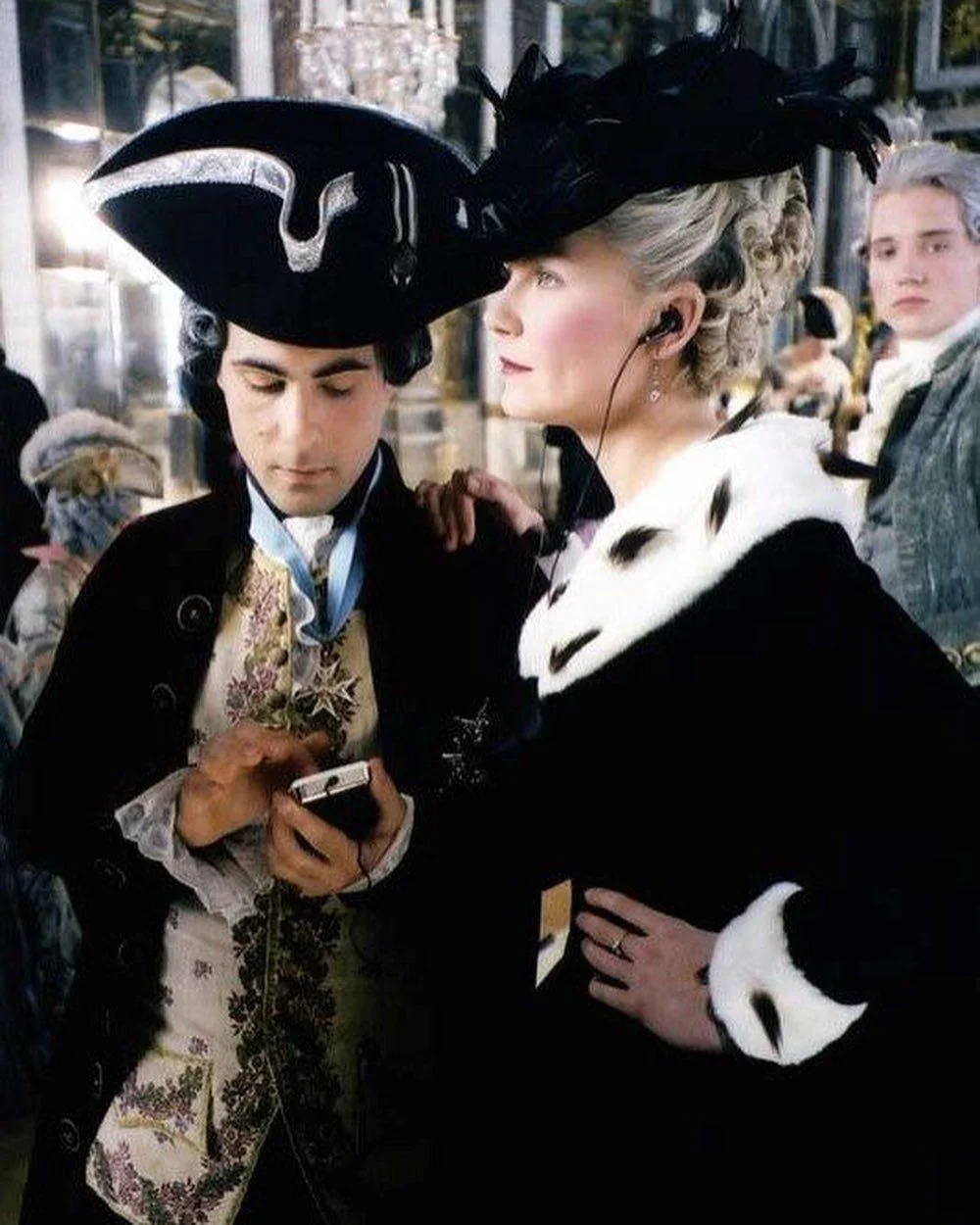
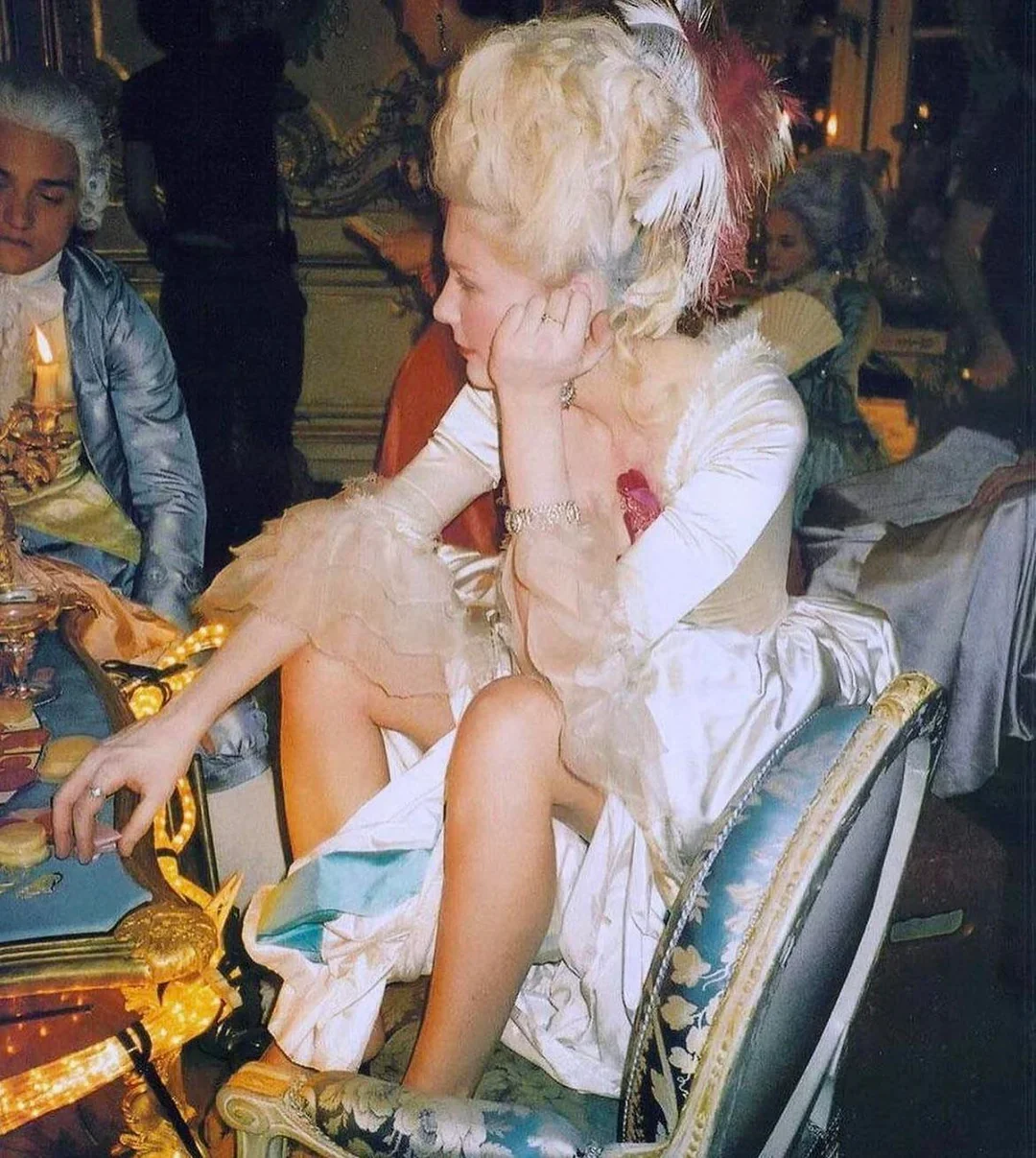
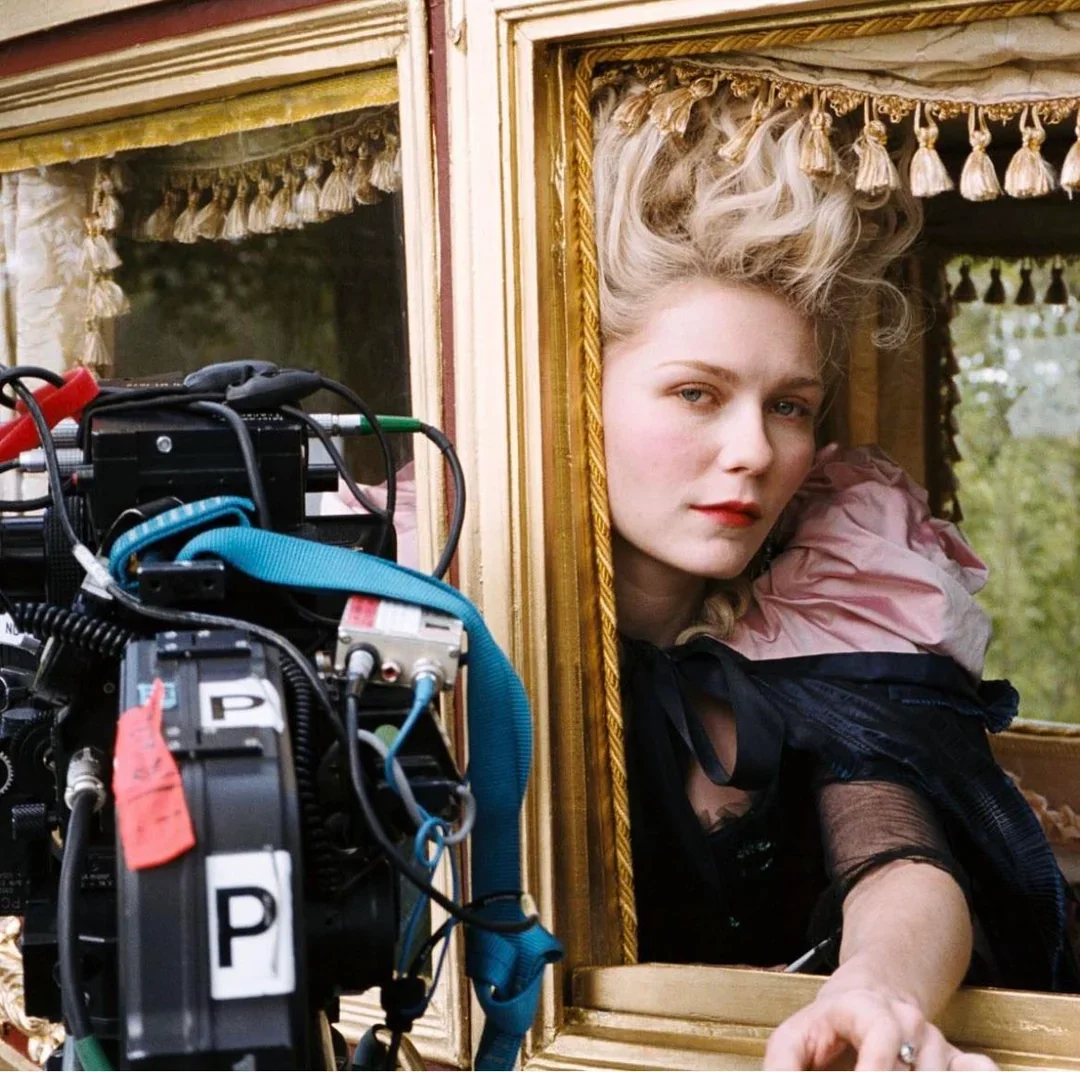
Dunst can be photographed sitting around in a corseted gown as if she were wearing jeans and a T-shirt. The elaborate hairstyles coexist with modern sunglasses, and so do silk dresses brush against cables, cameras, and production equipment. The spell is technically broken, but the images become even more interesting because of it.
After all, fashion is almost always most captivating when something feels slightly wrong.
As the “Perfect Coppola Girl,” Kirsten Dunst never seems overwhelmed by the clothes. She retains the relaxed quality that made her such a natural fit for Coppola’s world. Even as she’s smooshed beneath powdered hair, ribbons, and layers of costume
It’s all very early-2000s the way she occupies those photographs. She doesn’t appear to be an actress carefully maintaining the illusion of royalty between takes. But just a cool girl who just happens to be wearing an 18th-century gown. The ease is critical because without it, the images might simply register as production stills. Instead, they resemble accidental editorials.
Dunst made Marie Antoinette feel less like a museum figure and more like a young woman, and the candid photographs push that idea even further. The costumes are historical. Her energy is completely contemporary.
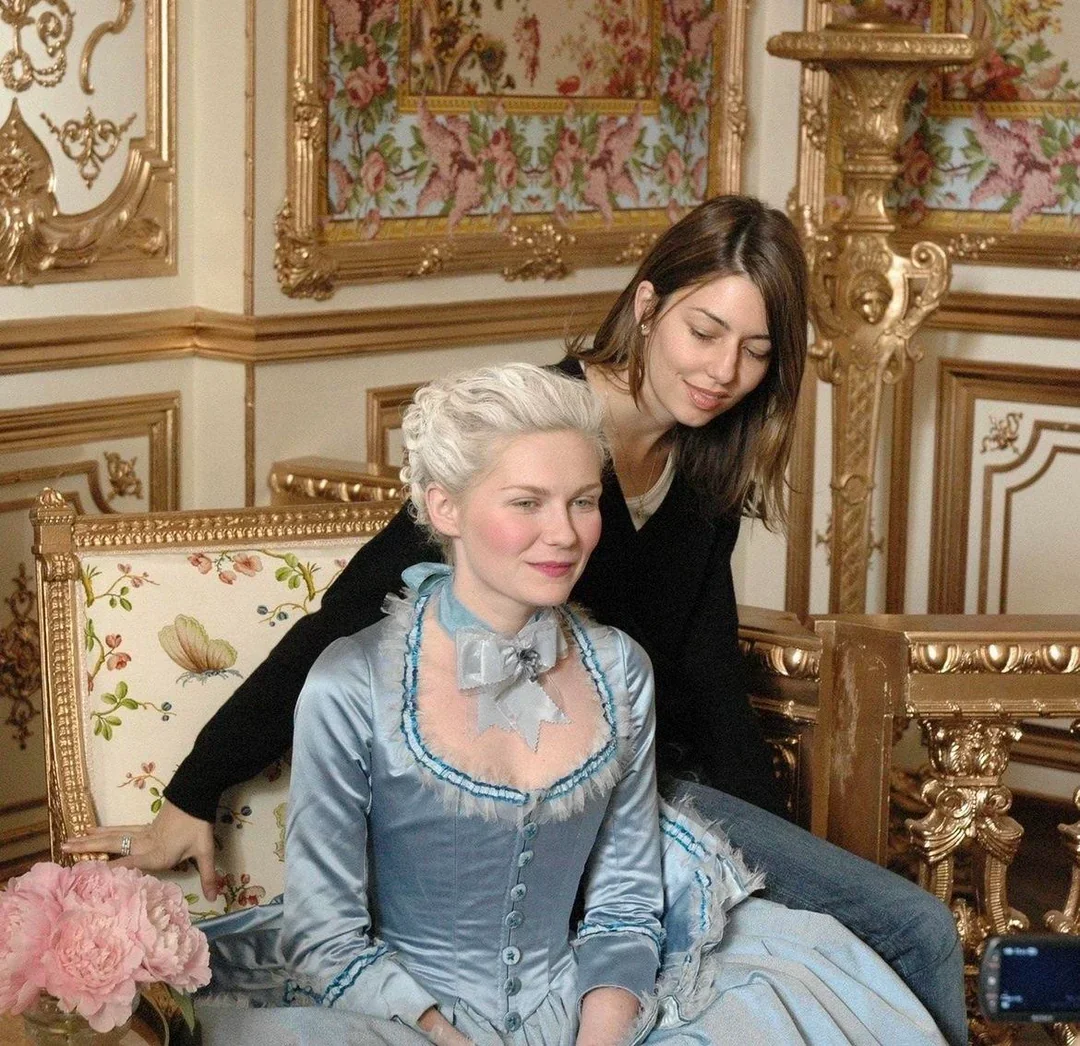
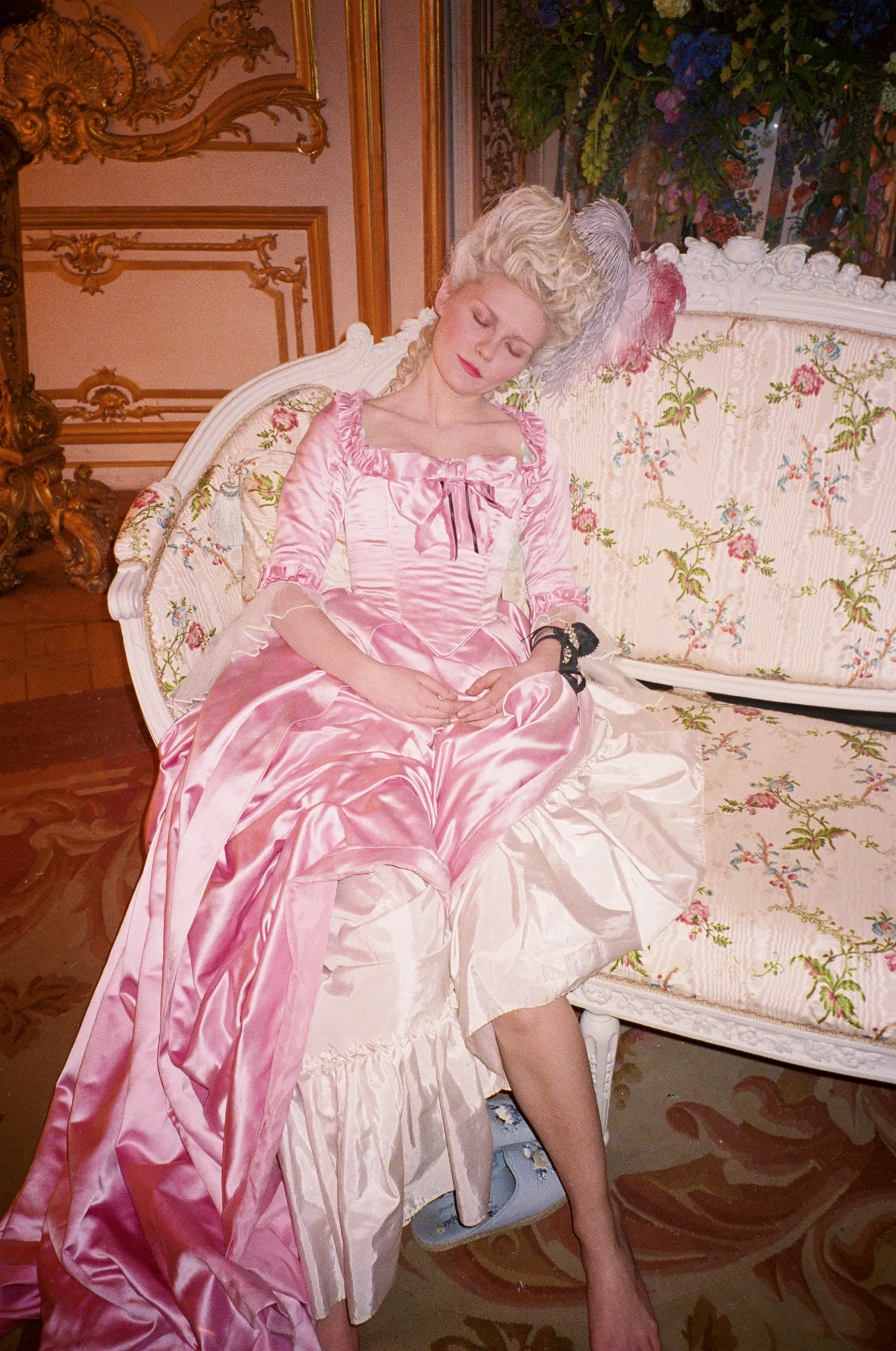
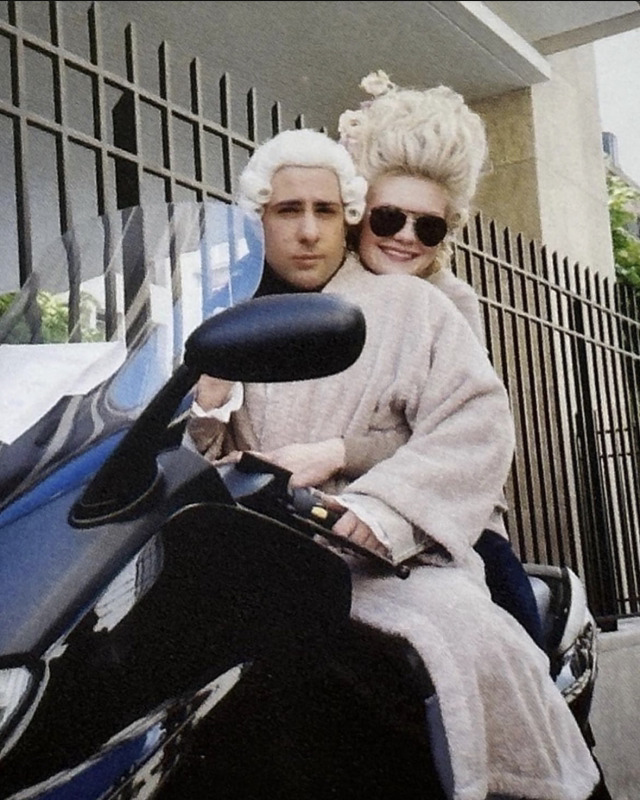
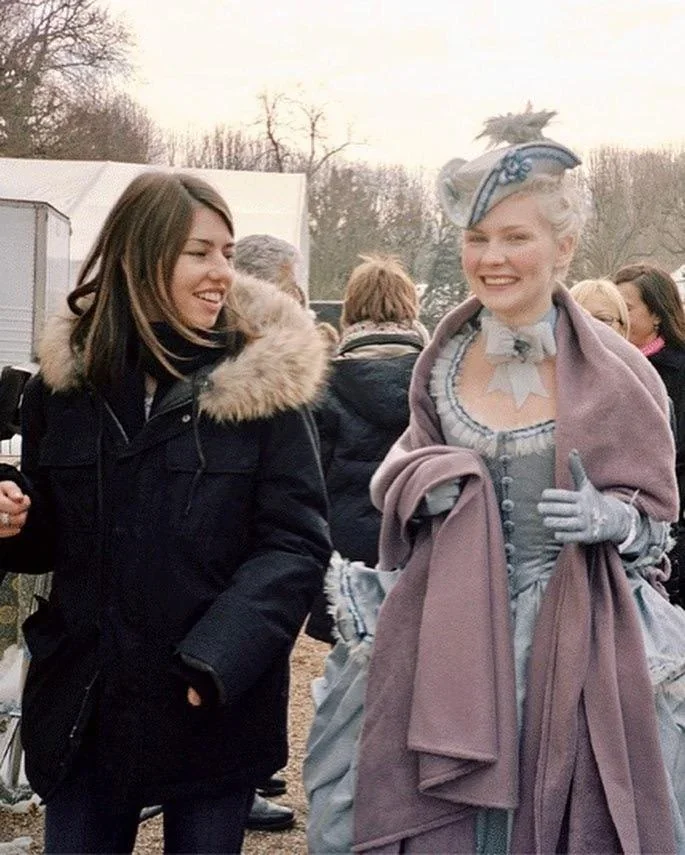
The anachronism was always the point. That collision between old and new is also built into Coppola’s film. Marie Antoinette was never interested in presenting Versailles as a sealed historical artifact. New Order, The Strokes, and Bow Wow Wow played over images of corsets and court life. A pair of Converse famously appears among the shoes in one montage, and the emotional language of the film belongs as much to teenage bedrooms and early-2000s cool girls as it does to 18th-century France. The behind-the-scenes photographs simply make that tension visible in another way.
Instead of modern music over historical imagery, we get a woman in a powdered wig behaving like someone taking five between shoots in 2005.
Milena Canonero’s Oscar-winning costumes were designed to tell Marie’s story through color, silhouette and excess, but outside the finished frame they take on another quality. They start looking weirdly wearable. Not literally, of course. Few of us are headed to dinner in panniers. But the attitude translates.
A ribbon around the neck and a pastel shoe paired with a corseted bodice mix the romantic details with a little mess. They make historical costume feel more like real personal style, and that’s probably why these images continue to resurface whenever fashion swings back towards ballet flats, corsetry, Rococo references, and hyper-feminine dressing.
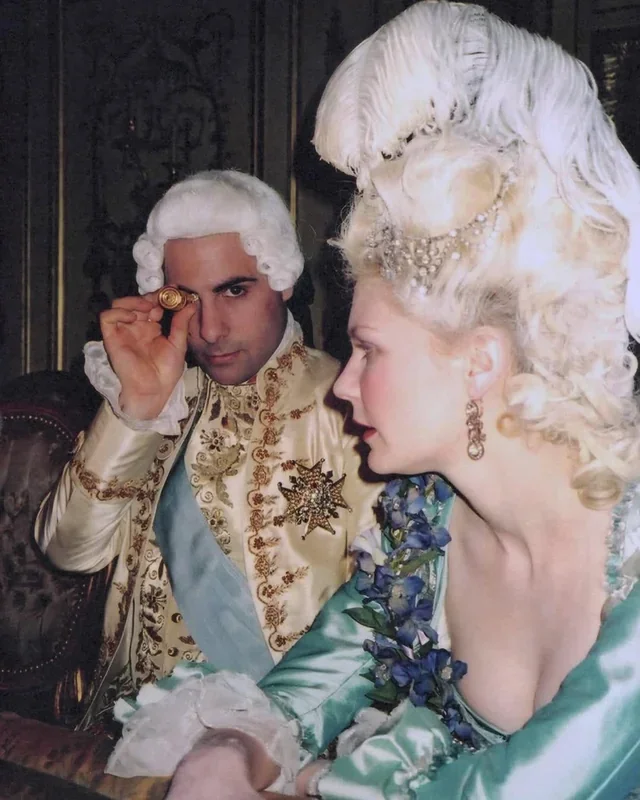
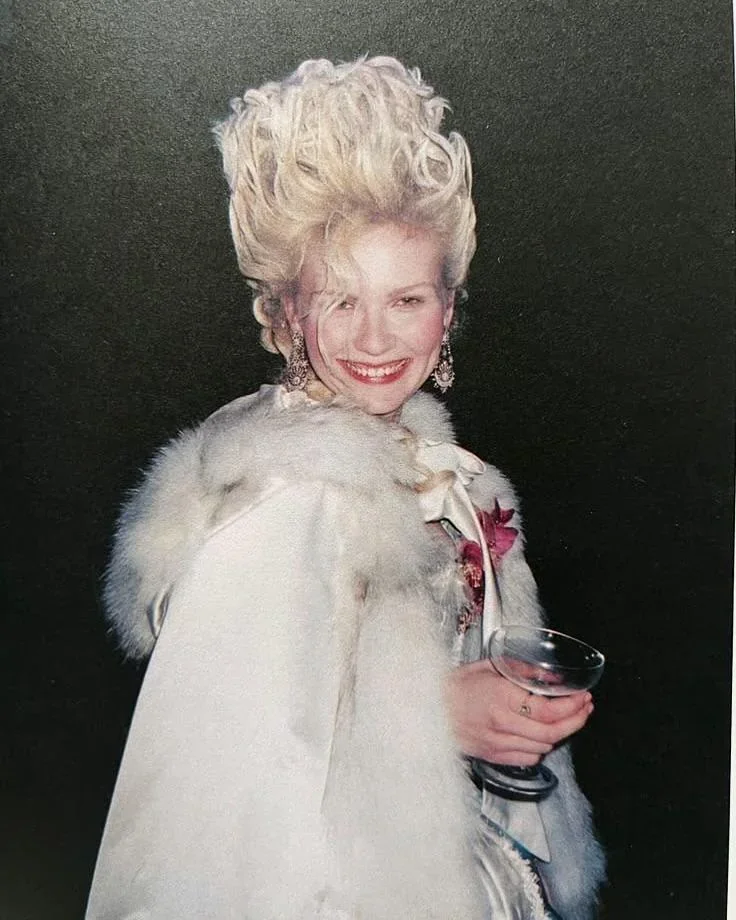
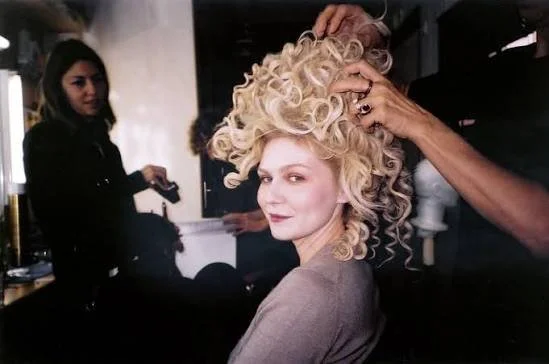
There is another reason the photographs feel so appealing now: they come from a moment before every second of a film set was expected to become polished social content. The candids are actually just that. There is no carefully staged “behind the scenes” carousel explaining the costume department or actors holding a product while pretending not to notice the camera. The images have the slightly grainy, imperfect quality of something we were never necessarily meant to obsess over, which naturally makes us want them even more.
We could call it the fashion moodboard that never went away because nearly two decades later, Marie Antoinette remains one of fashion’s favorite films to reference, and the behind-the-scenes imagery offers something slightly different from the famous stills. The finished movie gives us fantasy, and the set photographs give us attitude.
They show what happens when one of cinema’s most elaborate wardrobes meets the very modern reality of making a movie. Somewhere between the satin gowns, sunglasses, cigarettes, camera equipment, and moments of boredom, a whole new aesthetic emerged.
Not quite Versailles and not quite 2006. Just impossibly cool.