
When Candace Bushnell Turned Carolyn Bessette-Kennedy Into a Satirical Socialite
By Alexus Mosley
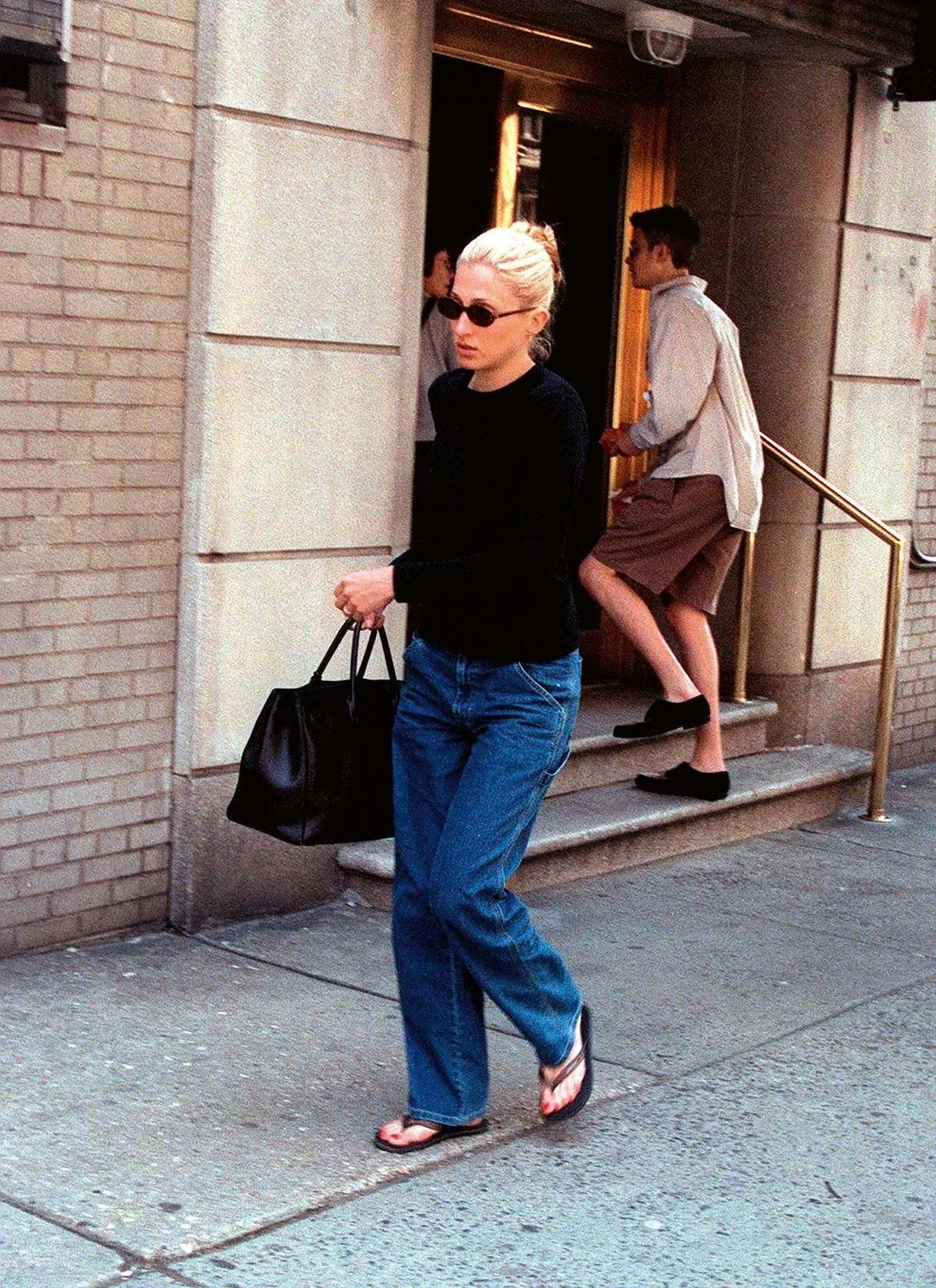
Certain women become so intertwined with New York mythology that they eventually stop feeling like real people and start feeling like characters. Carolyn Bessette-Kennedy was one of them.
By the late 1990s, the former Calvin Klein publicist had become Manhattan’s most fascinating woman. She rarely gave interviews or explained herself, seeming almost allergic to the celebrity machine that followed her everywhere. Yet that only fueled public fascination. Society columnists wrote about her while fashion magazines dissected her wardrobe, and photographers chased her through the city streets. Everyone seemed to have a theory about who she really was. Including Candace Bushnell.
In the November 1998 issue of Manhattan File, the author of Sex and the City introduced readers to a new heroine named Cecilia Kelly Bennett, or “CKB” for short. The subtitle, called Spoiled in the City, follows a beautiful socialite navigating New York society while enduring paparazzi attention, a troubled marriage, public scrutiny, and relentless gossip.
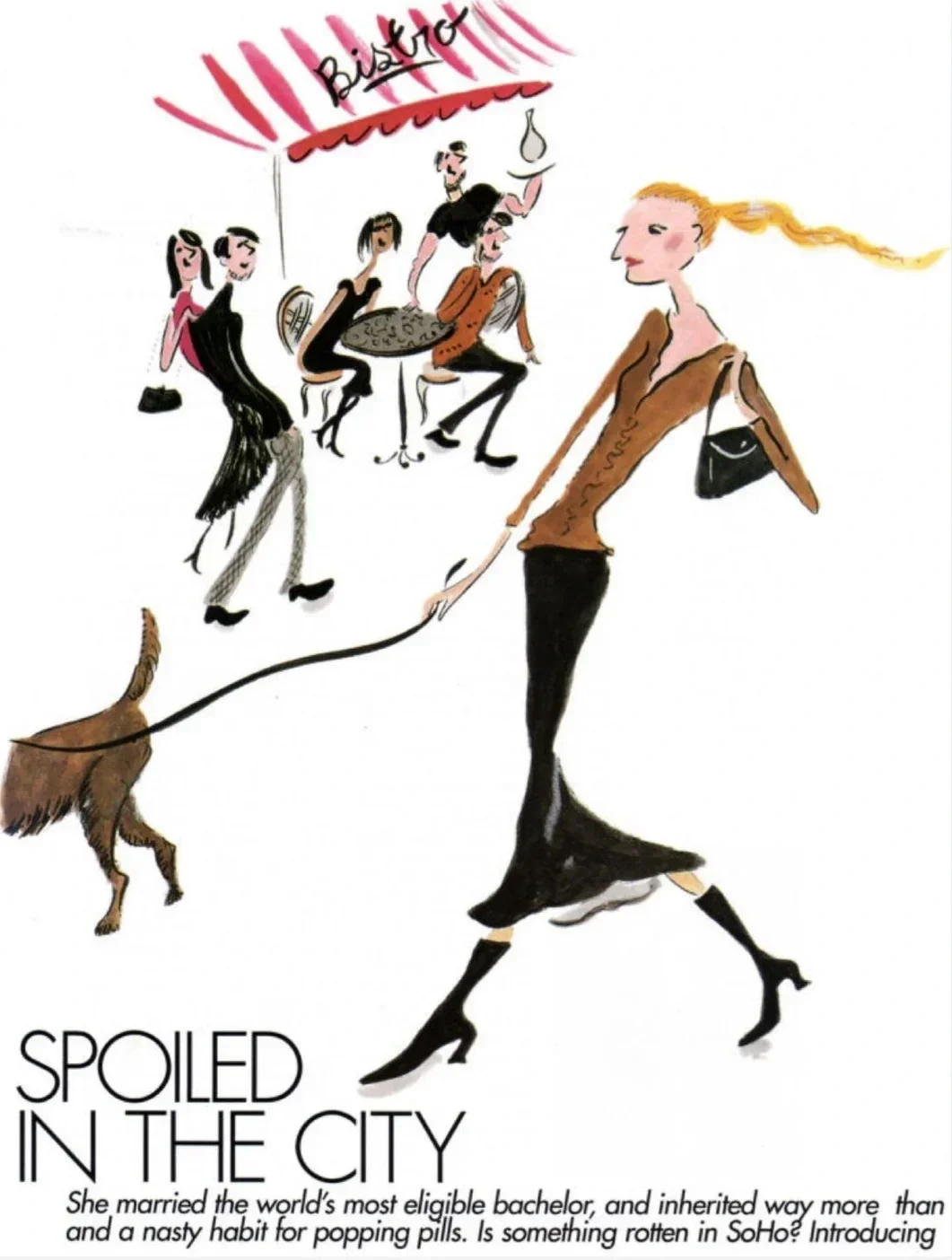
To many readers, the inspiration felt difficult to miss as CKB was blonde, glamorous, married to one of America’s most eligible bachelors, referred to as “P3”, and constantly under the microscope of New York society. Throughout the story, Bushnell paints a portrait of a woman caught between her own ego and spoiled brattery and inside the machinery of privilege and public fascination. The result reads like a darkly comedic social satire with more than a few winks toward one of Manhattan’s most famous residents.
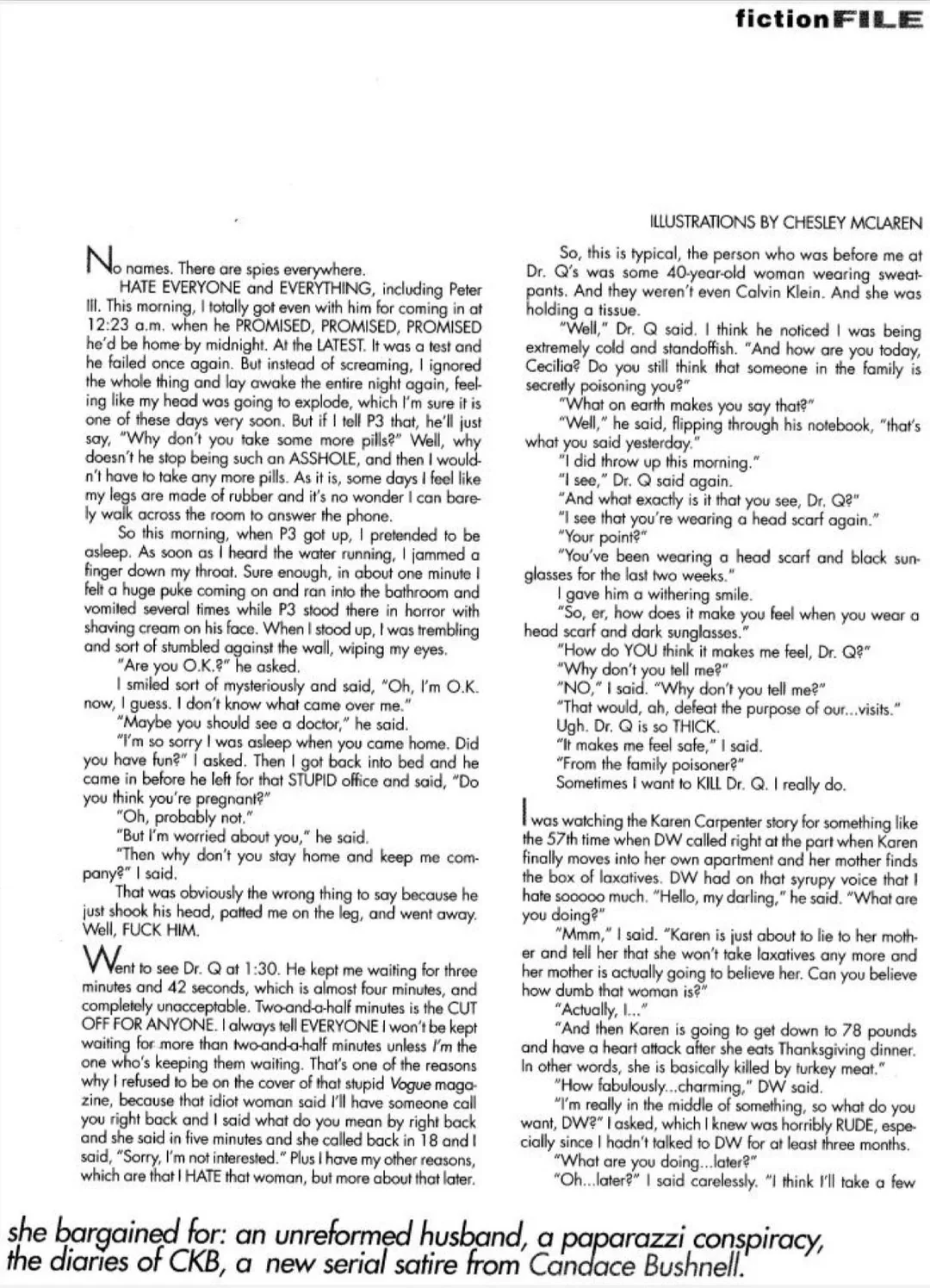
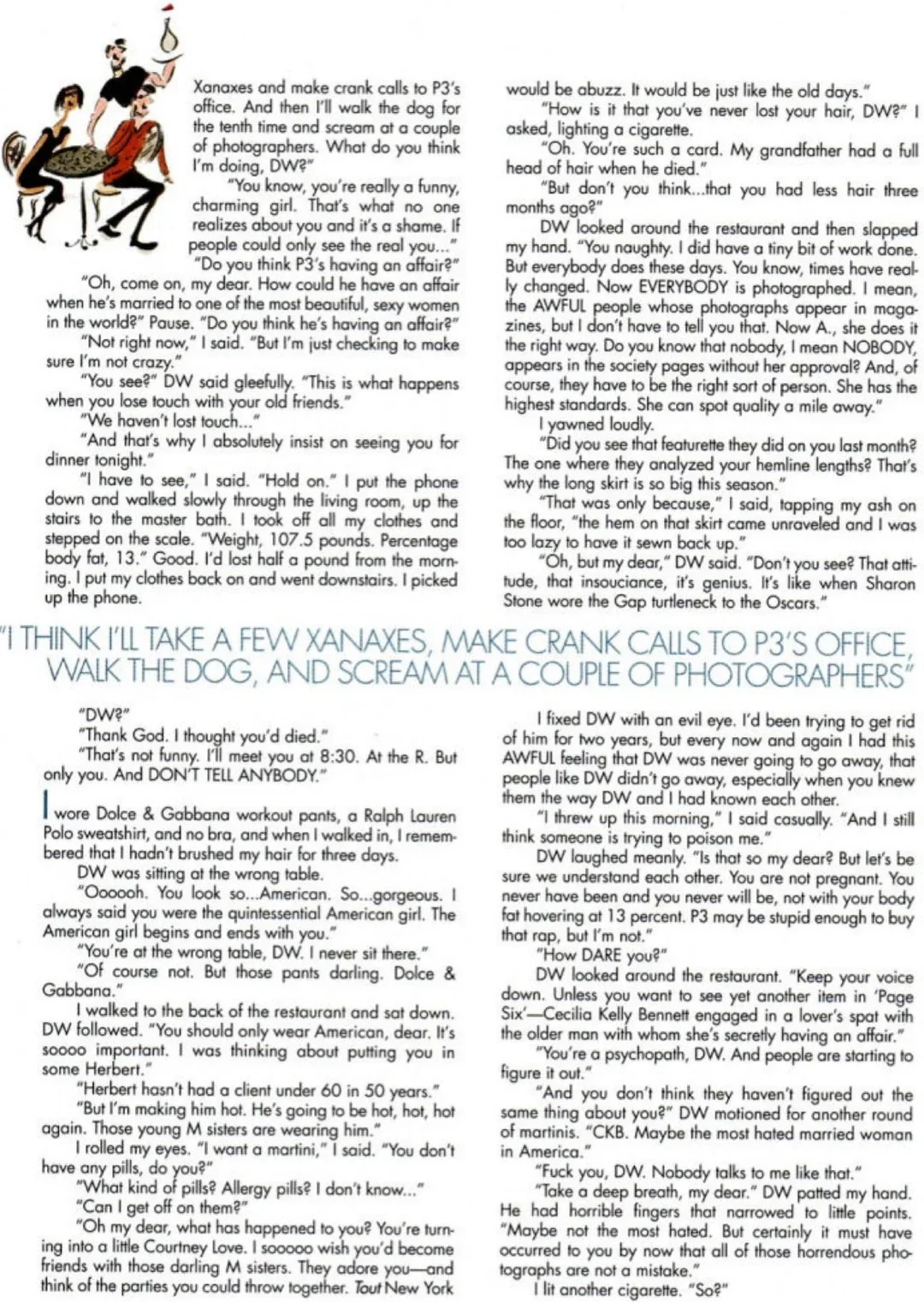
Reading Spoiled in the City nearly three decades after it was first published, and with the knowledge of CBK’s untimely death, it’s impossible not to be both shocked and particularly fascinated at just how obvious a nod it is to Bessette-Kennedy, especially with P3’s flight lessons being eerily mentioned. It also captures a very specific moment in New York history. This was an era when society pages became the whole truth and nothing but the truth, and when figures like Carolyn Bessette-Kennedy occupied a nearly royal position within the city’s social hierarchy.
Bushnell had built an entire career observing the dating lives, ambitions, and absurdities of Manhattan’s elite. Few writers understood the ecosystem of New York society more intimately. Her columns and novels often blurred the line between observation and fiction, drawing inspiration from the personalities that populated the city’s restaurants, charity galas, fashion parties, and private clubs. With CKB, she appeared to be doing exactly that.
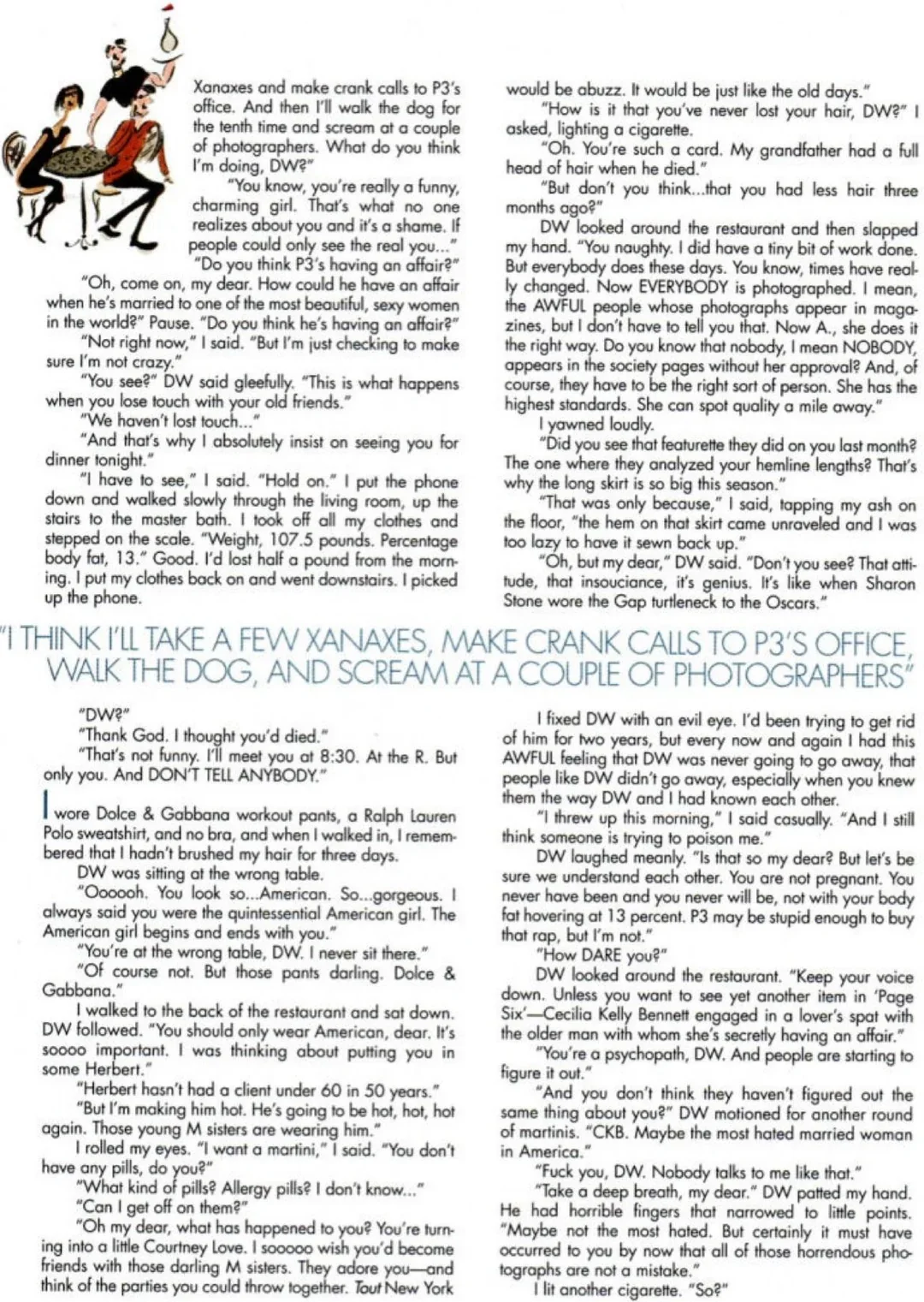
The story itself is far from flattering, with Cecilia being anxious, shallow, overwhelmed, and struggling to manage the pressures of her public image. At various points, it alludes to her battling bulimia, having a severe xanax dependency, and a tendency to fake pregnancies (likely for attention). She battles gossip, intrusive photographers, and a cast of social climbers eager to shape her into whatever version of New York society they find most useful. Bushnell’s trademark humor runs throughout the series, but so does a surprising amount of sympathy.
Reading it today feels almost like discovering a forgotten piece of New York folklore. While Carolyn Bessette-Kennedy remains remembered primarily as a style icon, intelligent woman who was highly skilled in public relations, and a dear friend to those who knew her, Spoiled in the City serves as a reminder of just how fixated Manhattan, the outer boroughs, and the world were by her existence. She wasn’t merely photographed or discussed; she became a source of both inspiration and speculation. People projected ideas onto her (some not so nice), whole writers fictionalized her (again, some not so nice). Society watched her every move.
Few women have occupied that kind of cultural space, and even fewer (just one to be exact) have been able to hold the name of Mrs. John F. Kennedy, Jr. Aside from the engrossment that comes with marrying America’s prince, perhaps what makes this CBK and this largely forgotten Candace Bushnell serial remains so intriguing nearly three decades later, is that beyond the designer clothes and society gossip, it offers a snapshot of a city obsessed with one woman. And a writer clever and gutsy enough to turn that obsession into fiction.