
Althea Gibson: The Trailblazer Who Opened the Court for Serena Williams and Coco Gauff
By Alexus Mosley
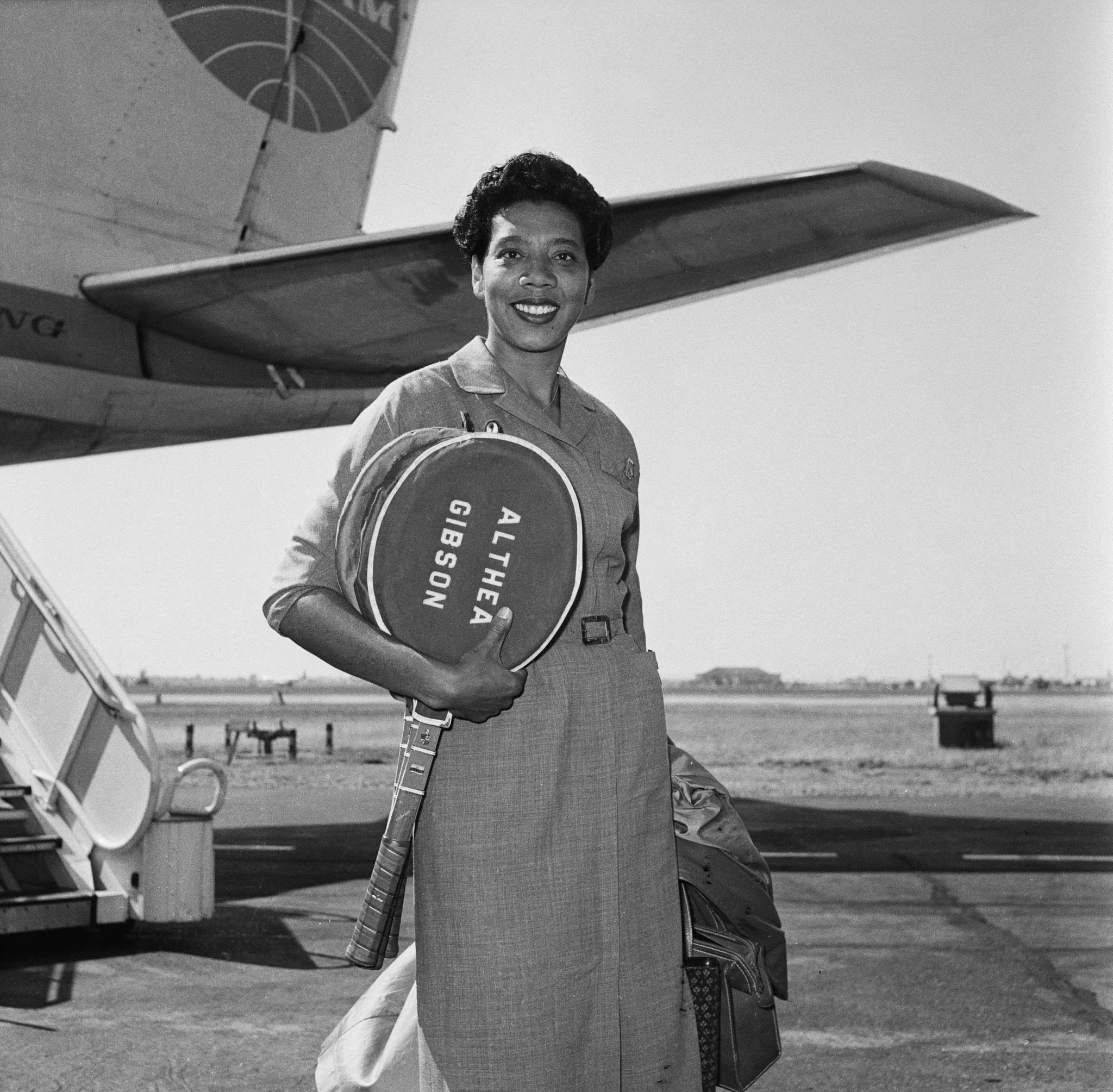
Althea Gibson descending the steps of an aircraft at London Airport (June 17, 1959)
Photo Credit: Bettmann Archive
Before Serena Williams and Coco Gauff became household names, there was Althea Gibson, a woman who changed the landscape of tennis forever.
Born in Silver, South Carolina, in August 1927, Gibson moved to Harlem, New York, with her family when she was just three years old. Growing up during segregation, she discovered tennis at a time when the sport was largely closed off to Black athletes. With limited access to courts, Gibson learned to play by waiting until the courts closed at night. Practicing under the cover of darkness, she developed an extraordinary sense of the game, learning where the lines were even when she could barely see them. The challenges that restricted her access to the sport would ultimately help shape the determination and skill that defined her historic career.
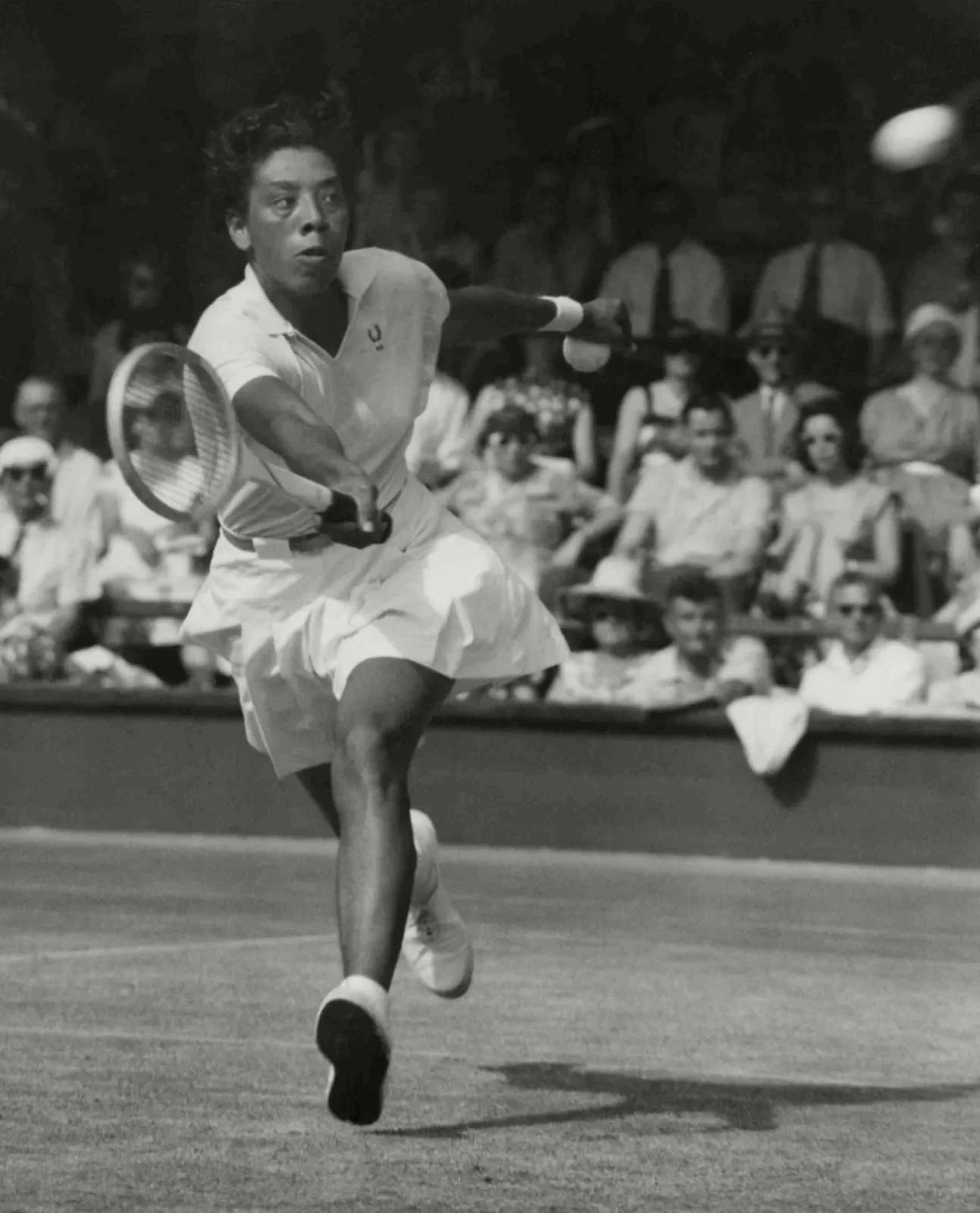
Althea Gibson during the Wimbledon Tennis Championships in London, England (June 8, 1957)
Photo Credit: Bettmann Archive / Getty Images
At the time, tennis was deeply segregated, and opportunities for Black athletes were extremely limited. Gibson’s talent was undeniable, but breaking into the sport required more than athletic ability; it required a community willing to help open doors that had been closed for generations. With financial support raised by her neighbors, Gibson began competing in tournaments. By the age of 15, she had won her first American Tennis Association National Junior Championship. She would go on to dominate the tournament for a decade, winning the title 10 consecutive times and establishing herself as one of the most promising players in the country.
Whatever it is, the way you tell your story online can make all the difference.
Despite her success, Gibson continued to face discrimination within the tennis world. In 1949, she was denied entry into the U.S. Open qualifying tournament, highlighting the barriers Black athletes faced even at the highest levels of competition. A turning point came in July 1950, when five-time Grand Slam singles champion Alice Marble published an open letter in American Lawn Tennis magazine criticizing racial exclusion in professional tennis and calling attention to Gibson’s treatment.
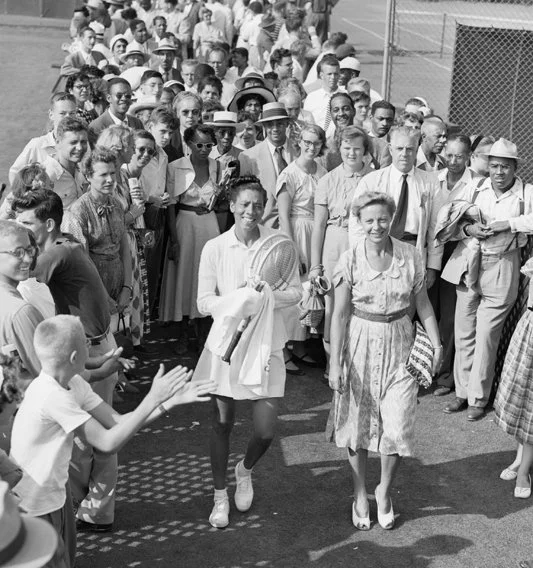
Althea Gibson walking alongside four-time champion Alice Marble at the West Side Tennis Club in Forest Hills, Queens, New York (August 28, 1950)
Photo Credit: New York Daily News Archive / Getty Images
Following Marble’s letter, Gibson was invited to compete in the U.S. Open, becoming the first Black athlete to participate in the tournament. More than a personal achievement, her arrival challenged the traditions of a sport that had excluded an entire community and paved the way for future generations of athletes.
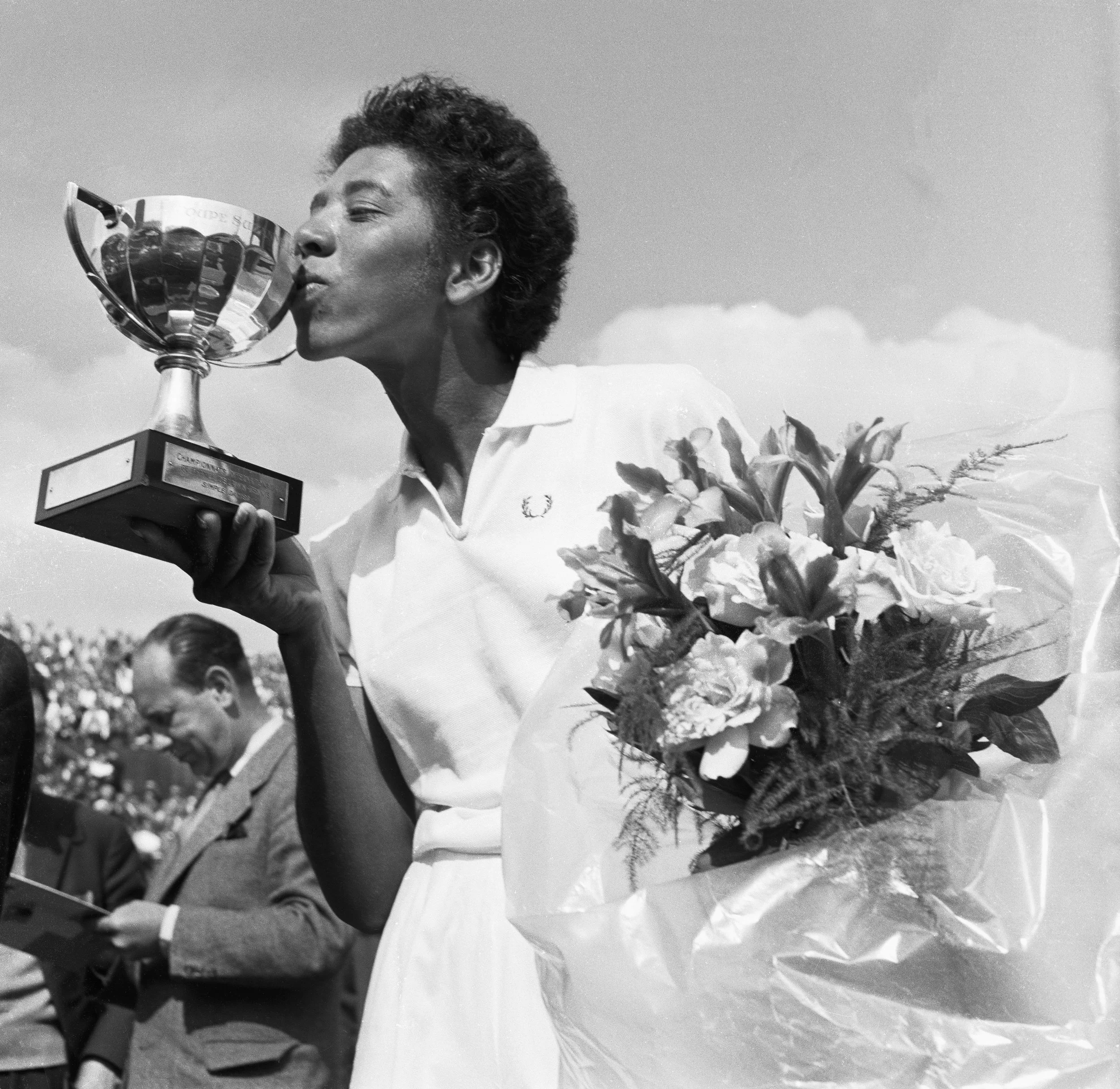
In 1956, Gibson reached another historic milestone when she became the first Black athlete to win a Grand Slam tournament. At the French Championships, now known as the French Open, she captured both the singles and doubles titles, officially cementing her place in tennis history.
The following year, Gibson continued her remarkable rise by winning the Wimbledon singles championship. She received her trophy from Queen Elizabeth II, becoming an international symbol of excellence and perseverance.
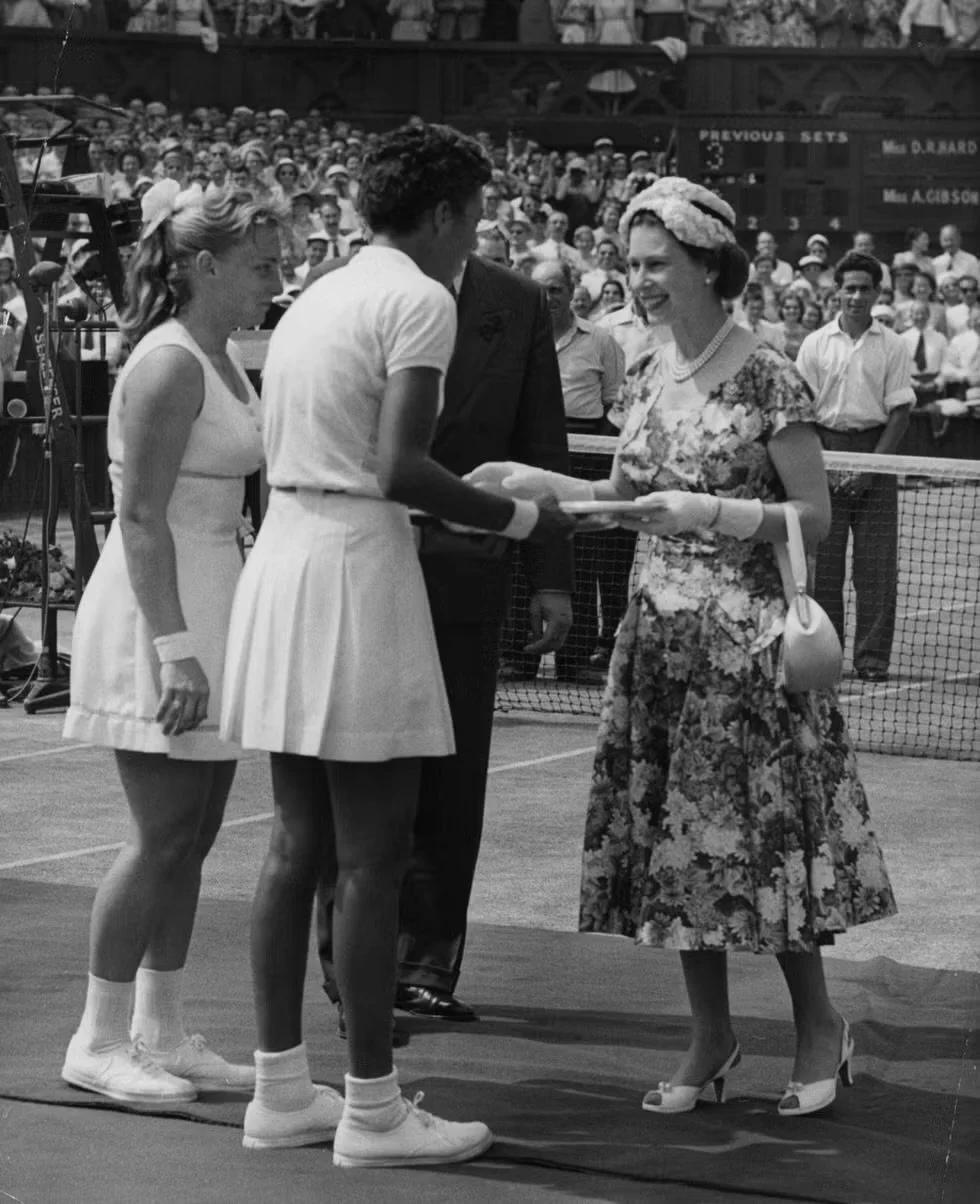
Queen Elizabeth II presenting the Venus Rosewater Trophy to Althea Gibson (July 6, 1957)
Photo Credit: Getty Images
When she returned to New York City after her Wimbledon victory, Gibson was celebrated with a ticker tape parade. It was the first ever organized in honor of a Black woman. Her achievements continued throughout her career. Gibson won a total of 11 Grand Slam titles, proving that her success was not a moment in history, but the result of years of talent, discipline, and resilience.
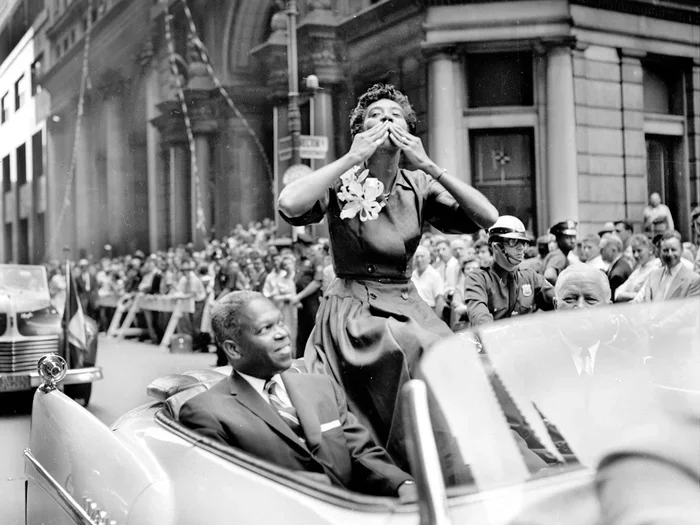
Althea Gibson blowing kisses from a convertible car during a celebratory parade (July 11, 1957)
Photo Credit: Bettmann via Getty Images
Gibson’s trailblazing career was not limited to tennis. After making history in one sport, she went on to break barriers in another. She became the first Black woman to compete on the Ladies Professional Golf Association (LPGA) Tour, continuing her legacy as an athlete who challenged expectations and expanded opportunities for those who came after her.
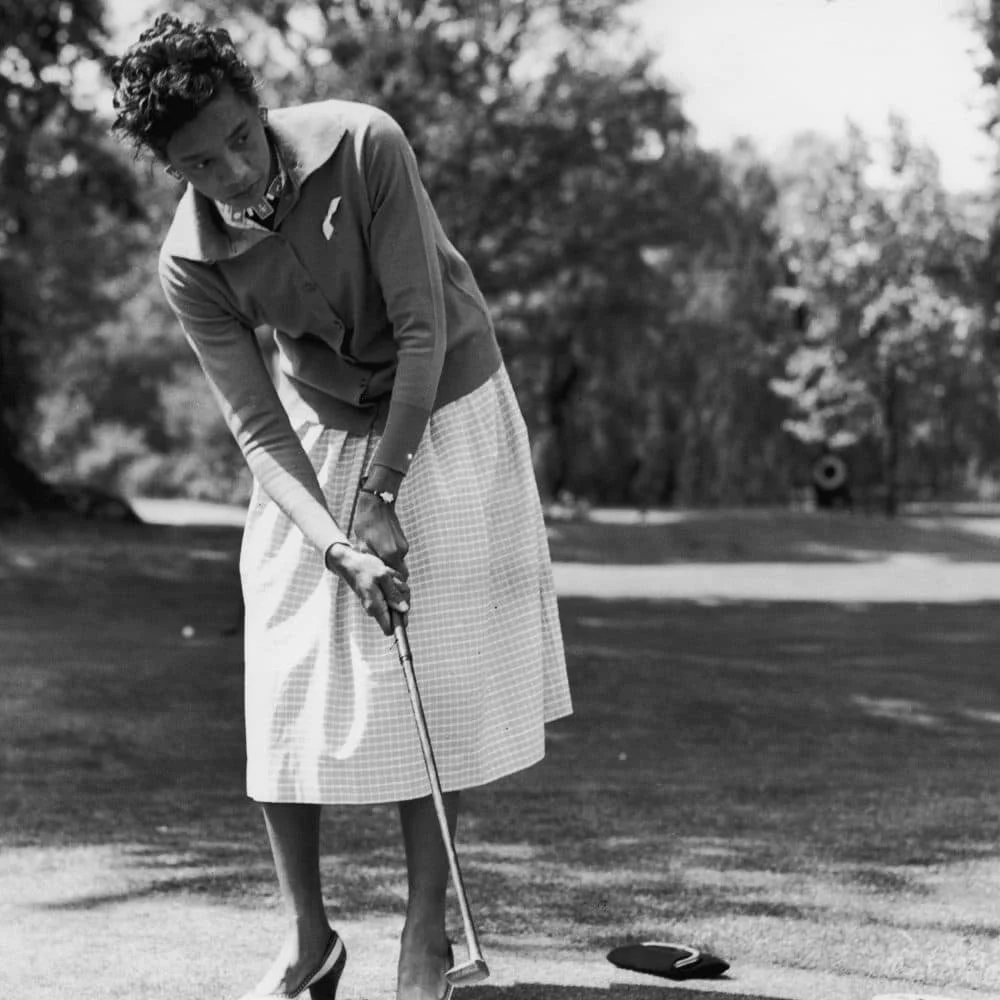
Althea Gibson playing golf was taken at the Hurlingham Club in London, England (June 6, 1957)
Photo Credit: Ron Burton/Getty
Today, the careers of athletes like Serena Williams, Venus Williams, Naomi Osaka, and Coco Gauff are part of a legacy that began with pioneers like Althea Gibson. She was not simply a champion who collected titles, but an athlete who transformed what was possible. Every time a young Black athlete steps onto a tennis court with dreams of competing at the highest level, they are walking through a door Gibson helped open.