
The History of Pink: How the Color Became Fashion’s Most Powerful Hue
By Alexus Mosley
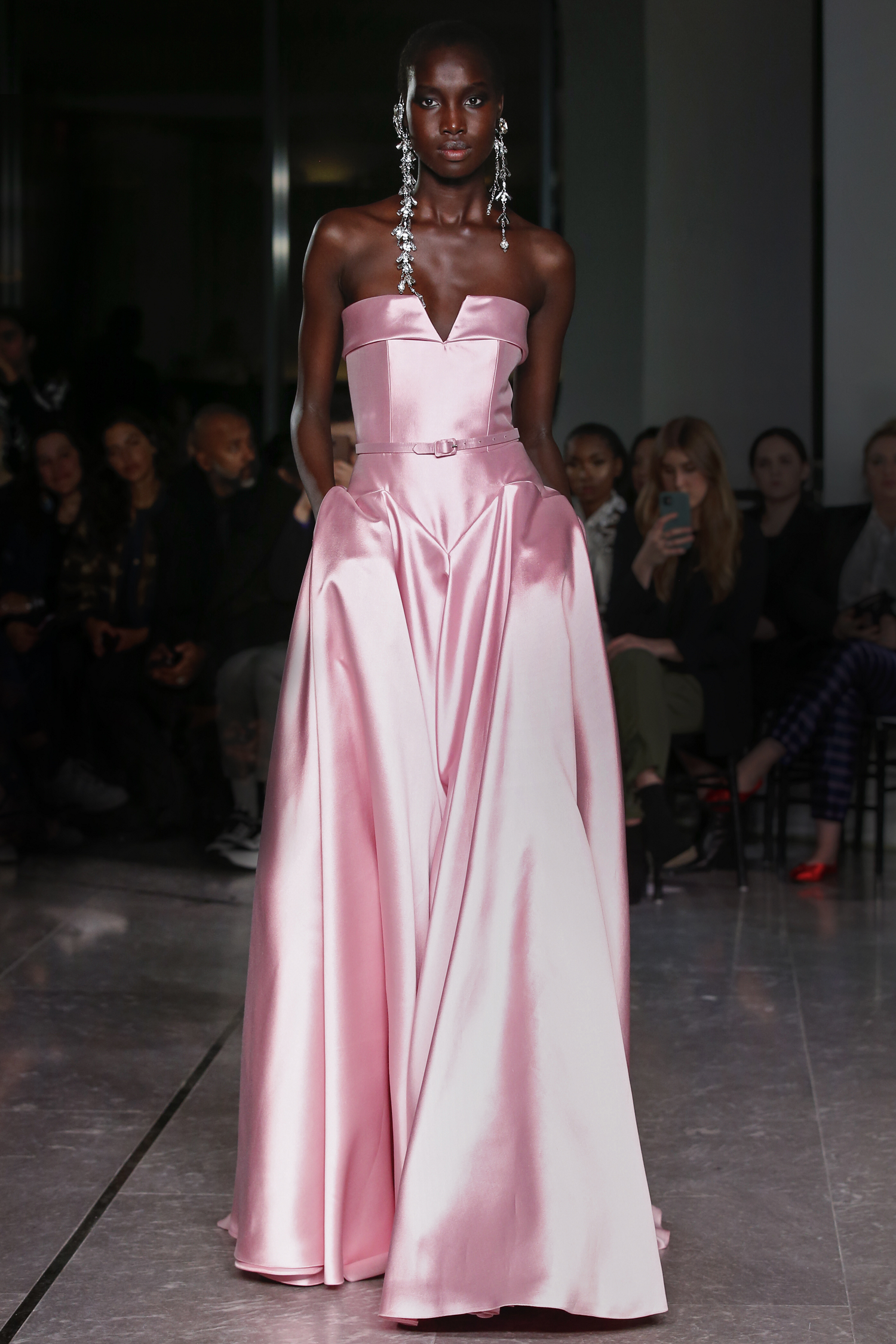
Naeem Khan Fall 2020 Ready-to-Wear
Few colors have experienced a cultural transformation as remarkable as pink. Today, it is widely recognized as the color of femininity, romance, and beauty, dominating everything from luxury fashion collections to beauty campaigns and the recent Barbiecore phenomenon. Yet this modern understanding is the product of centuries of shifting social values. Long before pink became synonymous with girlhood, it represented aristocratic luxury and masculine strength.
The history of pink is not simply the history of a color. It is a reflection of evolving attitudes toward class, gender, politics, consumer culture, and fashion itself. From the lavish courts of eighteenth-century France to the haute couture salons of Paris and the suburban homes of postwar America, pink has continually reinvented itself while remaining one of fashion’s most enduring shades.
The Origins of Pink
The word pink did not originally describe a color. Instead, it referred to a flowering plant belonging to the Dianthus family, whose petals featured delicately serrated, or “pinked,” edges. During the seventeenth century, the flower’s soft reddish hue gradually lent its name to the color itself. Although artists had long created pale shades of red by mixing pigments with white, pink was not widely regarded as an independent color until much later.
As European art and fashion evolved throughout the seventeenth and eighteenth centuries, pink emerged as a distinct and desirable hue. Improvements in textile dyeing and silk production allowed increasingly sophisticated pastel colors to flourish, laying the foundation for pink’s rise within elite society.
Pink and the Luxury of the French Court
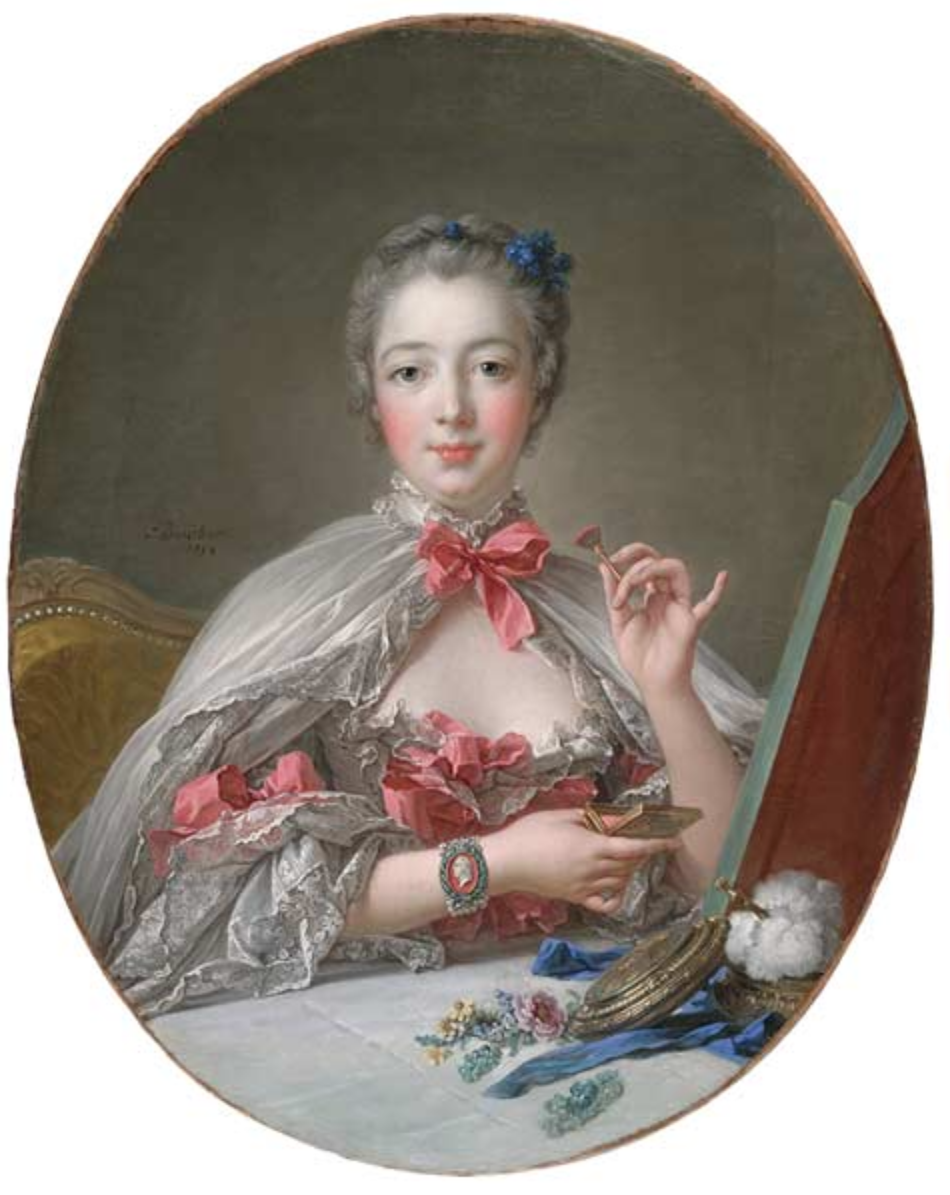
Pompadour at Her Toilette by François Boucher (circa 1750)
No period embraced pink more enthusiastically than eighteenth-century France.
The Rococo era, which flourished during the reign of King Louis XV, celebrated elegance, intimacy, ornamentation, and refined luxury. Fashion shifted away from the dramatic jewel tones of the Baroque period in favor of delicate pastels, floral embroidery, and airy silk fabrics. Among these colors, pink quickly became one of the defining shades of aristocratic taste.
Perhaps no individual influenced the popularity of pink more than Madame de Pompadour, the influential mistress of King Louis XV and one of the most important tastemakers of her generation. Beyond her political influence, Madame de Pompadour served as a patron of artists, architects, designers, and manufacturers, helping establish France as Europe’s cultural capital.
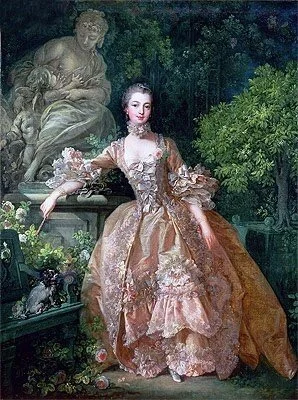
Madame de Pompadour, 1759 by Francois Boucher.
Her admiration for soft rosy hues became so closely associated with her image that the prestigious Sèvres porcelain manufactory developed a distinctive shade known as Rose Pompadour. More than a fashionable color, it symbolized wealth, sophistication, refinement, and access to the highest circles of French society.
To wear pink during the Rococo period was not simply a stylistic choice. It communicated status. Expensive silk garments dyed in fashionable shades required considerable wealth, making pink one of the era’s most luxurious colors.
When Pink Was Considered Masculine
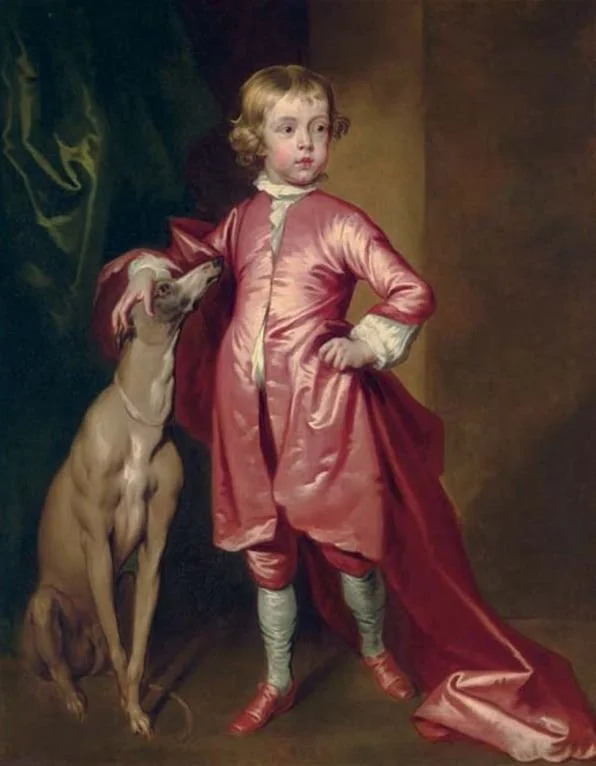
Portrait of a Youth of the Lee Family, Probably William Lee of Totteridge Park by John Vanderbank
Contrary to modern assumptions, pink was not originally considered a feminine color.
Throughout much of European and American history, infants and young children were dressed similarly regardless of sex, often wearing white garments because they could easily be bleached and cleaned. As children’s fashion gradually became more color-specific during the late nineteenth and early twentieth centuries, retailers and etiquette publications frequently recommended pink for boys and blue for girls.
This recommendation reflected the symbolic meanings attached to each color rather than biological ideas about gender. Pink was understood as a softer version of red, a color historically associated with military uniforms, courage, authority, passion, and blood. Because soldiers and rulers had long worn red as a symbol of strength and power, pink inherited many of those associations and was viewed as appropriately masculine for young boys. Blue, by contrast, carried associations with gentleness, serenity, and religious devotion. It was frequently connected to depictions of the Virgin Mary in European art, leading many to consider it especially suitable for girls. The reversal of these color associations demonstrates that gendered meanings are not fixed or universal. Rather, they are cultural constructions that evolve alongside society.
Elsa Schiaparelli and the Reinvention of Pink
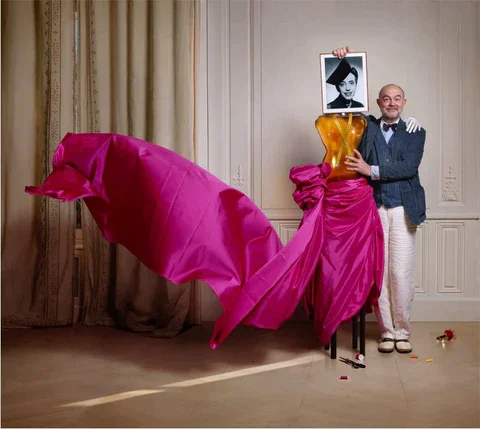
Christian Lacroix paying tribute to Elsa Schiaparelli for Vanity Fair (2013)
If eighteenth-century France established pink as a symbol of luxury, Italian-born designer Elsa Schiaparelli transformed it into a symbol of artistic rebellion. One of the twentieth century’s most innovative couturiers, Schiaparelli rejected traditional notions of elegance in favor of surrealism, theatricality, and bold experimentation. In 1937, she introduced the world to Shocking Pink, an electrifying shade of fuchsia that became synonymous with her fashion house.
Named after her perfume Shocking, the vivid color challenged conventional ideas of femininity. Rather than conveying softness or delicacy, Shocking Pink projected confidence, individuality, and creative freedom. It became one of fashion’s most recognizable signature colors and remains closely associated with Schiaparelli’s legacy nearly a century later. Through Schiaparelli, pink evolved from an aristocratic pastel into a modern statement of artistic expression.
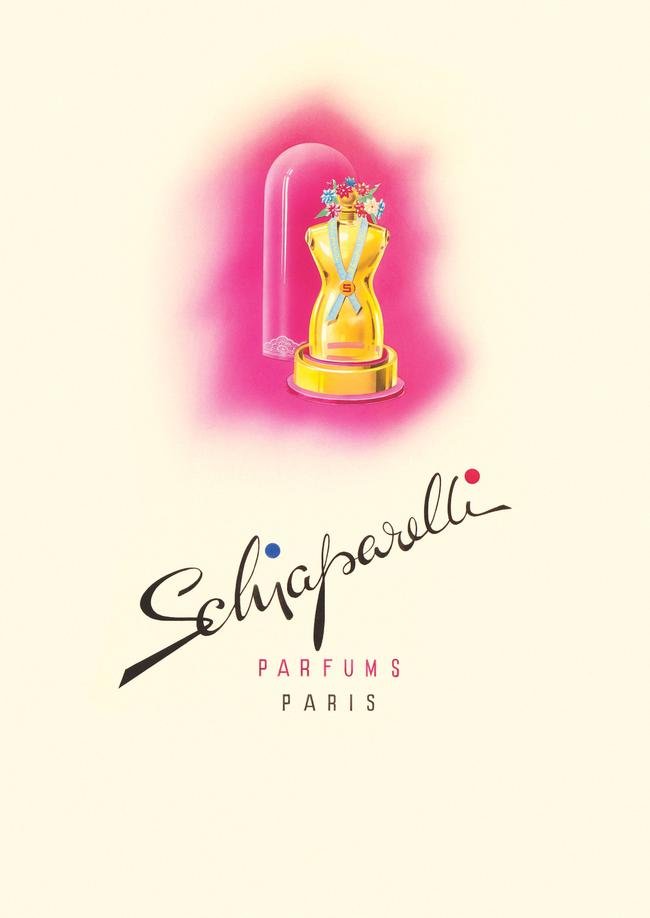
Elsa Schiaparelli's Shocking perfume by Leonor Fini (1937)
How Pink Became the Color of Femininity
The modern association between pink and women emerged largely after the Second World War. As millions of women who had entered the workforce during the war were encouraged to return to domestic life, advertisers increasingly promoted an idealized vision of suburban femininity. Consumer goods became central to this image, and manufacturers embraced pink as the visual language of the modern American housewife. This went as far as pink kitchen walls, refrigerators, telephones, bathrooms, and even wardrobes, all of which became fixtures of postwar advertising. Companies marketed the color as cheerful, nurturing, and distinctly feminine, reinforcing traditional gender roles through consumer products.
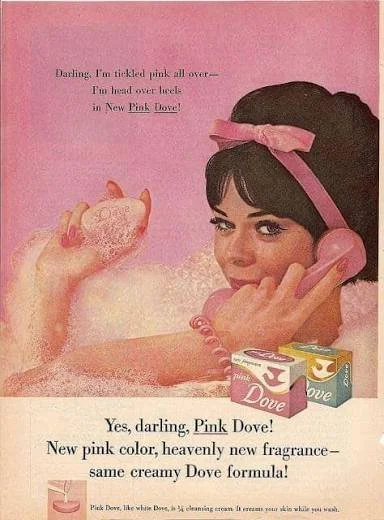
Pink Dove soap advertisement (1962)
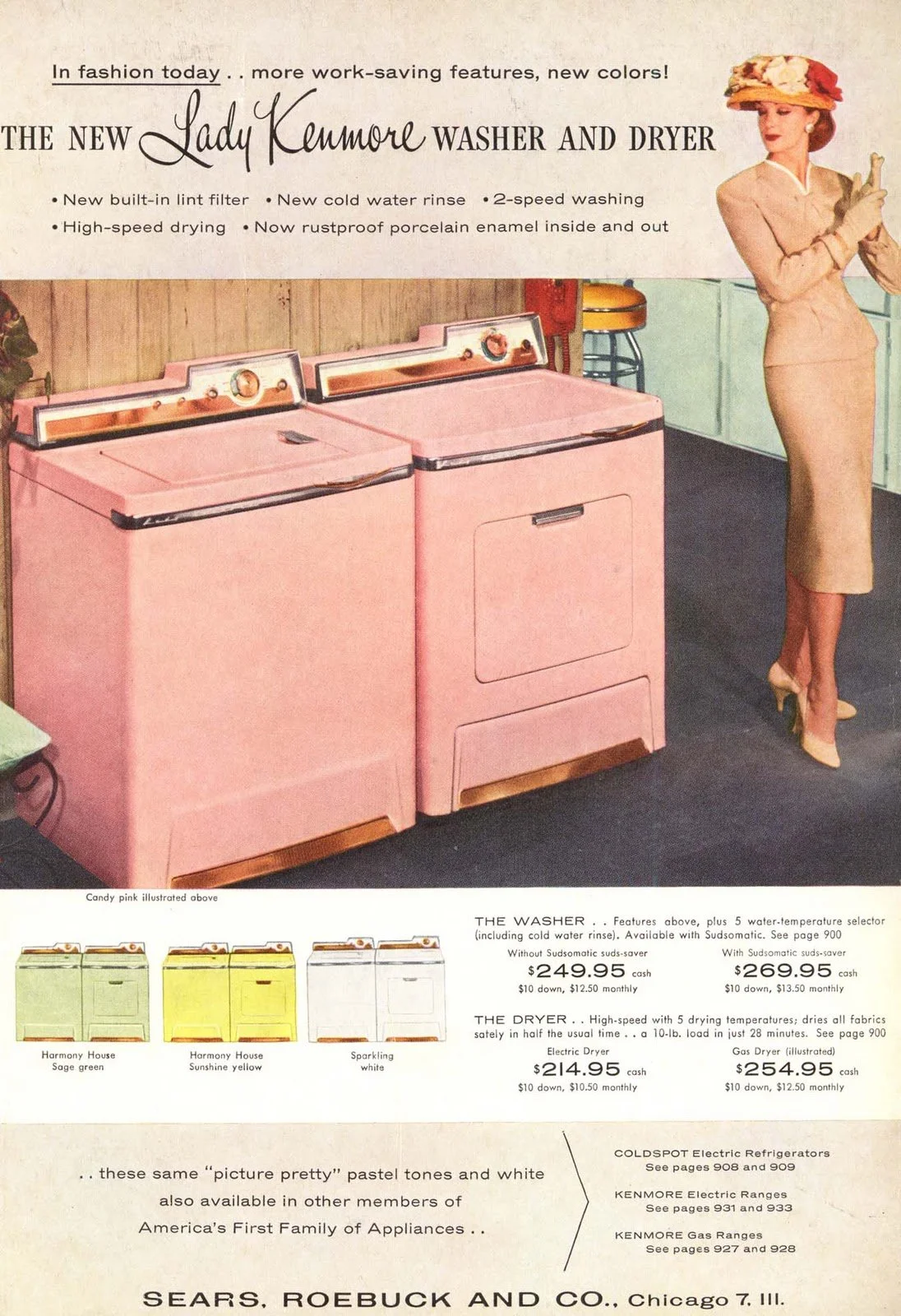
Lady Kenmore washer and dryer (1958)
This period also witnessed the rapid expansion of children’s marketing. Toy manufacturers, clothing companies, and department stores increasingly divided products into separate categories for boys and girls, with pink becoming firmly established as the defining color of girlhood.
Although advertisers played a significant role in feminizing pink after the Second World War, one woman helped accelerate its popularity more than almost anyone else: First Lady Mamie Eisenhower. Known for her fondness for soft blush tones, Mamie frequently wore pink gowns to public events. She became so closely associated with the color that a particular shade was affectionately dubbed “Mamie Pink.”
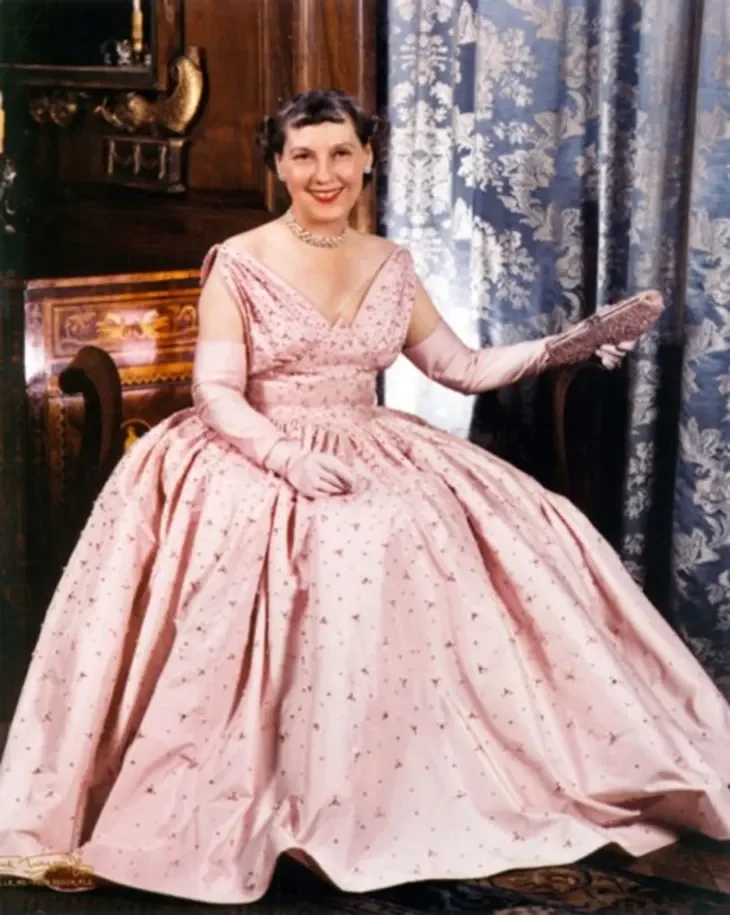
First Lady Mamie Eisenhower in her inaugural gown, January 1953. Photo Credit: Bettmann Archive
Her influence extended well beyond her wardrobe. Following the Eisenhowers’ move into the White House in 1953, Mamie decorated several rooms in varying shades of pink, incorporating the color into furniture, fabrics, china, and decorative accents. As magazines eagerly documented the First Lady’s style, manufacturers responded by producing pink appliances, telephones, bathroom fixtures, and home furnishings for consumers hoping to recreate a touch of White House elegance in their own homes. Through Mamie Eisenhower, pink became synonymous with domestic sophistication and postwar prosperity, reinforcing its growing association with American femininity.
Hollywood Says “Think Pink”
If the White House introduced pink into American homes, Hollywood ensured it became a cultural aspiration. One of the color’s most iconic cinematic celebrations arrived in 1957 with Funny Face, starring Audrey Hepburn and Fred Astaire. During the film’s unforgettable musical sequence, “Think Pink,” fashion editors declare that the future of style belongs not to beige, gray, or black, but to pink. The exuberant number celebrated the fashion industry’s growing influence over consumer culture while positioning pink as the defining color of elegance, youthfulness, and modern glamour.
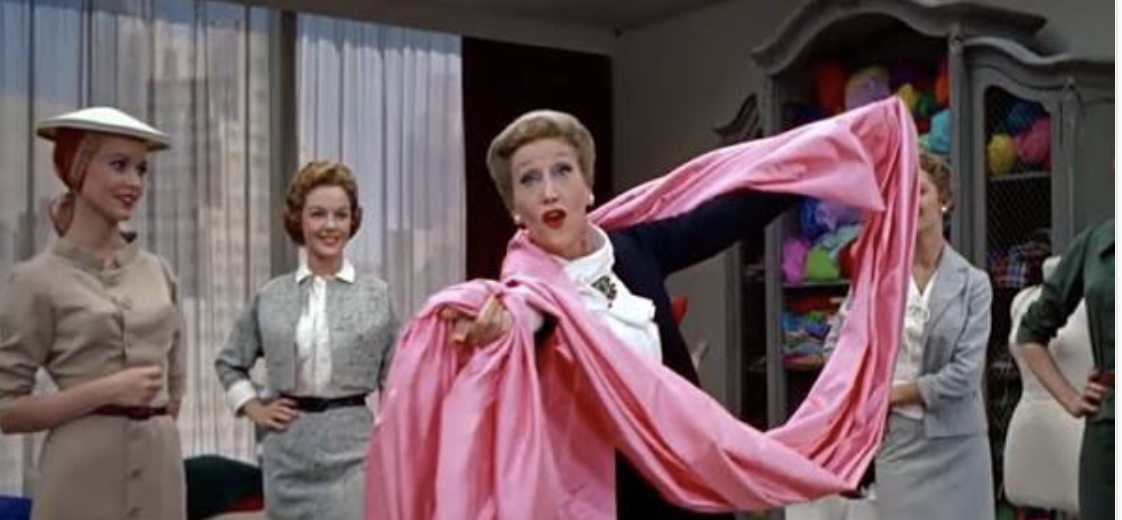
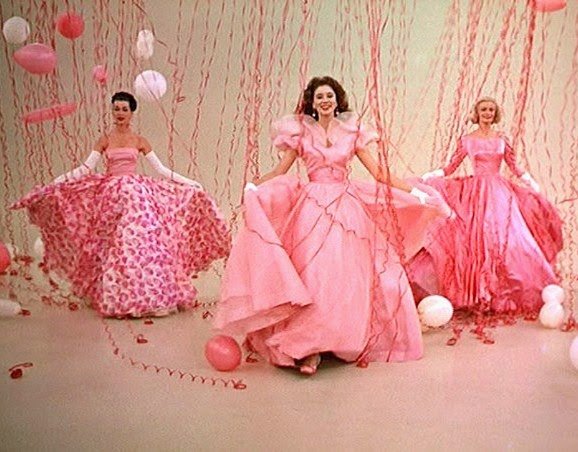
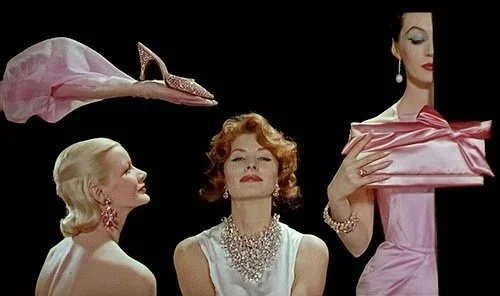
Released during the height of America’s postwar optimism, Funny Face reinforced the message already appearing in advertisements and department stores: pink was fashionable, sophisticated, and undeniably feminine. Nearly seventy years later, the musical number remains one of cinema’s most enduring tributes to fashion and one of the color’s defining moments in popular culture.
Barbie’s Pink Revolution
No cultural figure has shaped the modern identity of pink more profoundly than Barbie. When Mattel introduced Barbie in 1959, pink had already become firmly associated with femininity. Yet over the following decades, the doll elevated the color from a fashionable preference to a global cultural symbol. Through her vibrant packaging, Dreamhouse, Corvette, wardrobe, and endless accessories, Barbie transformed pink into the visual language of aspiration. It came to represent glamour, imagination, confidence, and the possibility of becoming anything.
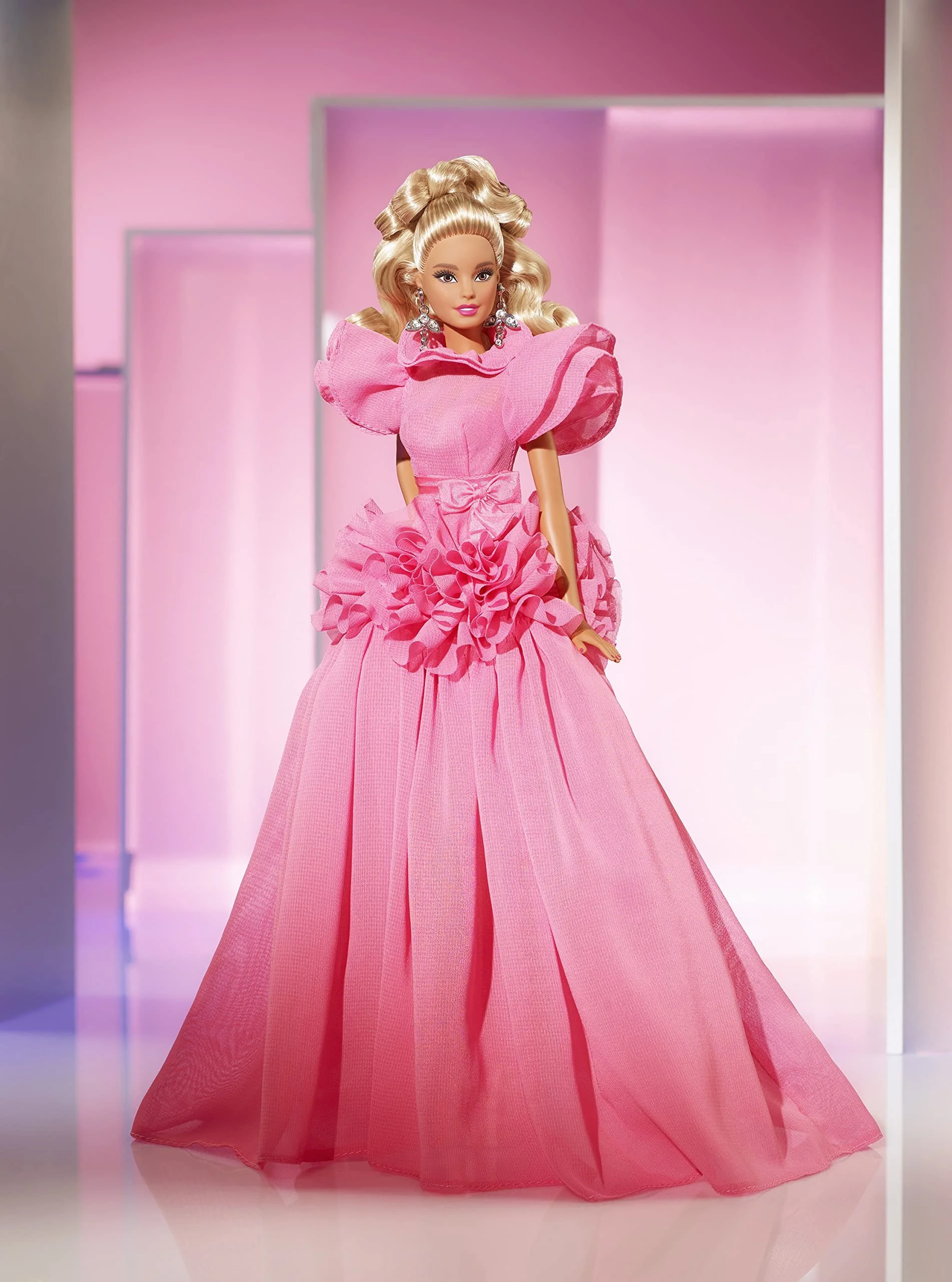
Barbie Signature Pink Collection Doll 3
The relationship between Barbie and pink proved remarkably enduring. For generations of children, the two became virtually inseparable, helping establish one of the most recognizable brand identities in history. More than sixty years after Barbie’s debut, Greta Gerwig’s blockbuster Barbie (2023) reignited the world’s fascination with the color, inspiring the viral Barbiecore movement. Fashion houses, beauty brands, celebrities, and retailers embraced every imaginable shade of pink, demonstrating that a color with roots in eighteenth-century French aristocracy could continue to define contemporary style.
Pink’s Modern Renaissance
Fashion, however, has never allowed pink to remain static. Throughout the late twentieth and early twenty-first centuries, designers continually reinterpreted the color, proving its extraordinary versatility. Whether appearing as delicate ballet pink, vibrant neon, romantic blush, or saturated magenta, pink has remained a constant presence on international runways.
In recent years, Valentino’s monochromatic Pink PP Collection demonstrated the remarkable visual power of a single shade, transforming hot pink into a luxury statement. Shortly afterward, Barbie's global success ignited the Barbiecore movement, once again placing pink at the center of fashion, beauty, and popular culture. Unlike the postwar era, however, today’s embrace of pink is often understood as an act of personal expression rather than social expectation. Designers and consumers alike have reclaimed the color as something capable of representing confidence, playfulness, glamour, creativity, nostalgia, and individuality all at once.
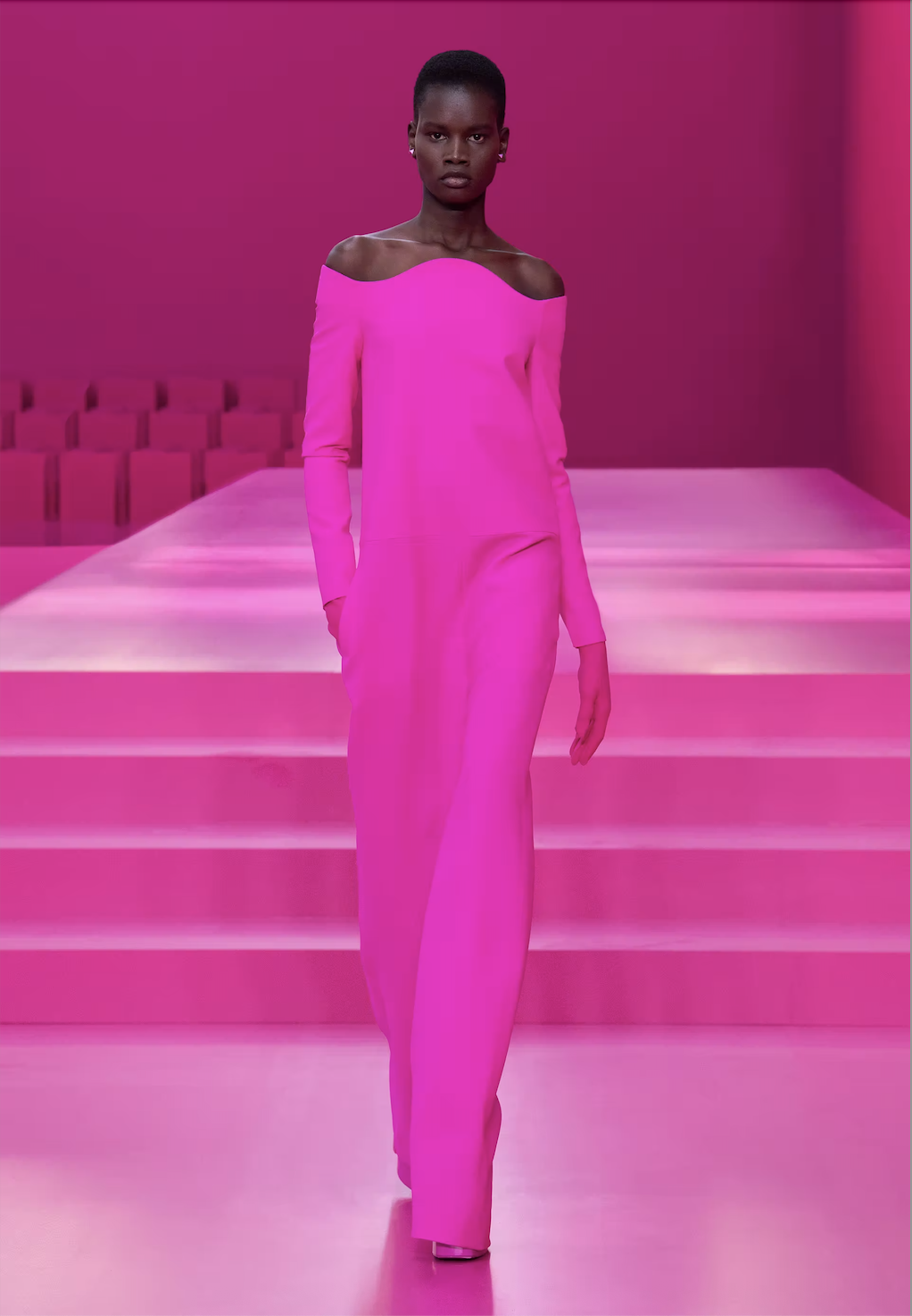
Valentino Fall/Winter 2022-2023 "Pink PP" collection
Pink has never possessed a single meaning. Over the centuries, it has symbolized royal privilege, masculine strength, artistic innovation, domestic femininity, luxury, rebellion, and cultural reinvention. Few colors have reflected society’s changing values as dramatically or as consistently.
Its remarkable journey from the salons of Versailles to Elsa Schiaparelli’s couture house, from postwar suburban America to the runways of Paris and the resurgence of Barbiecore illustrates fashion’s unique ability to transform ordinary colors into powerful cultural symbols.
Ultimately, the history of pink reminds us that fashion is never merely decorative. Colors carry stories. They reveal changing ideas about identity, beauty, power, and society itself. Pink, perhaps more than any other hue, proves that even the simplest color can become one of fashion’s most enduring and influential symbols.