
Sofia Coppola’s Marie Antoinette Turns 20 and Still Has Us Dreaming in Pastels
By Alexus Mosley
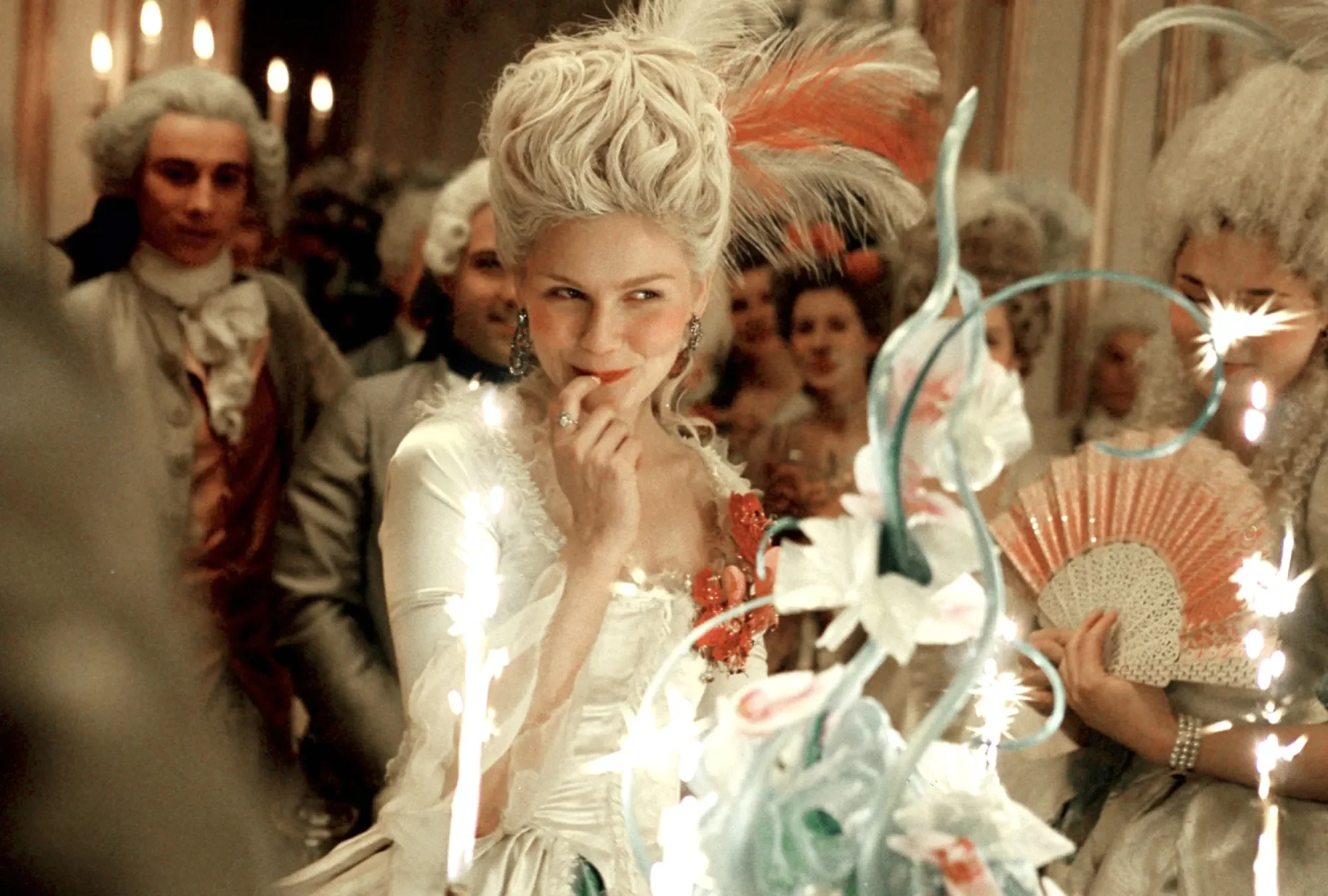
Photo Credit: Sony Pictures / Columbia Pictures
Pass the macarons. Sofia Coppola’s Marie Antoinette is turning 20.
Released in U.S. theaters on October 20, 2006, the film brought a distinctly contemporary sensibility to the court of Versailles. Starring Kirsten Dunst as Marie Antoinette and Jason Schwartzman as Louis XVI, Coppola’s interpretation made room for youthful awkwardness beneath the silk and ceremony.
Twenty years later, its appeal remains easy to understand. There are the dresses, of course. The shoes. The elaborate desserts. But beneath all that beauty is a story about a young woman learning that being watched is very different from being understood.
Dunst’s Marie enters a world where even getting dressed becomes a public performance. Marriage carries expectations she cannot control, privacy is scarce, and the palace’s rituals make ordinary moments feel impossibly complicated. Coppola finds intimacy within that spectacle, allowing her queen to be bewildered, bored, delighted, and lonely.
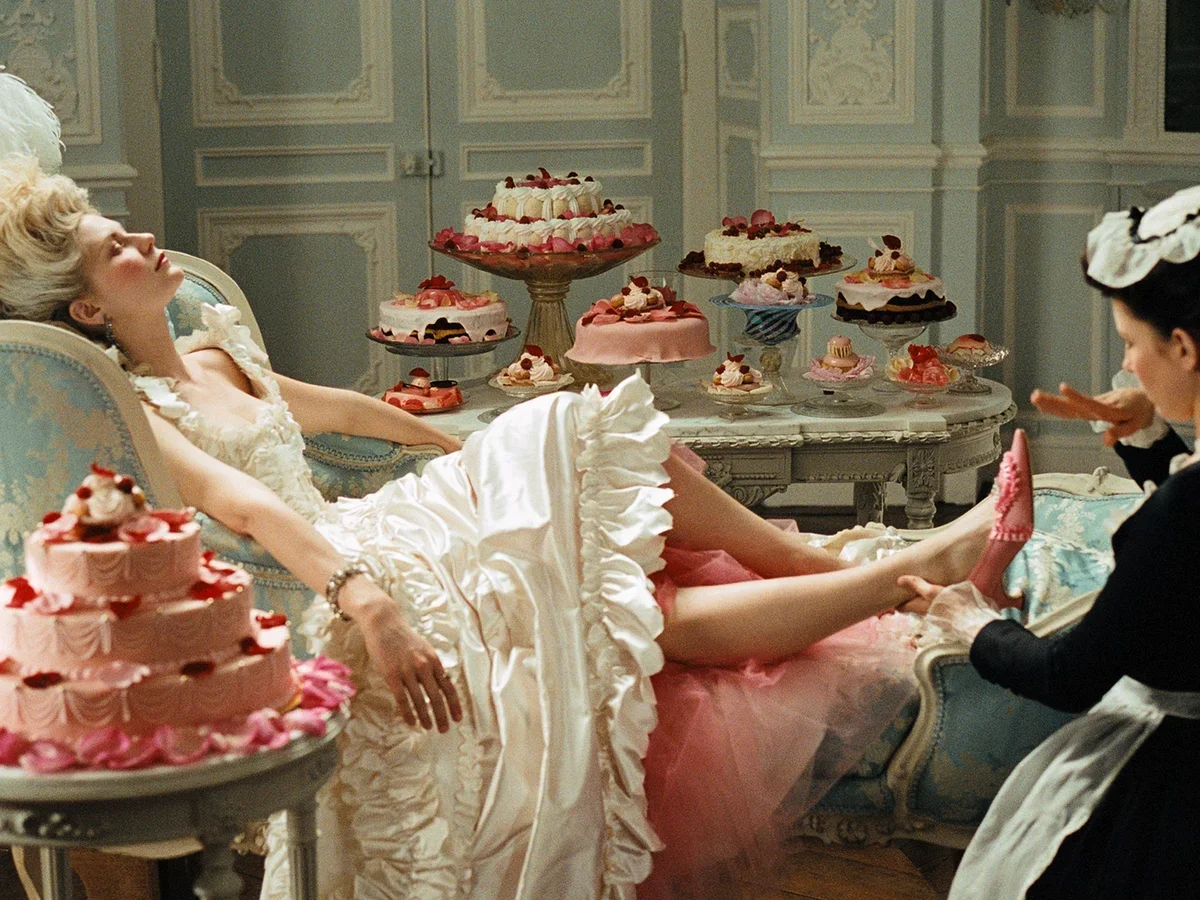
Photo Credit: Sony Pictures / Columbia Pictures
That perspective gives the film its emotional pull. Versailles can feel like an exquisite place to be trapped.
Naturally, the wardrobe deserves its own birthday toast. Costume designer Milena Canonero’s work earned an Academy Award, while Manolo Blahnik supplied the shoes. Together, their contributions helped create a screen wardrobe that makes getting dressed look like both a pleasure and an occupation.
There was a delicious starting point for the palette: Canonero recalled Coppola bringing her Ladurée macarons and asking that their pastel shades inspire the costumes. The result gives the film a visual sweetness that makes its moments of discomfort all the more striking.
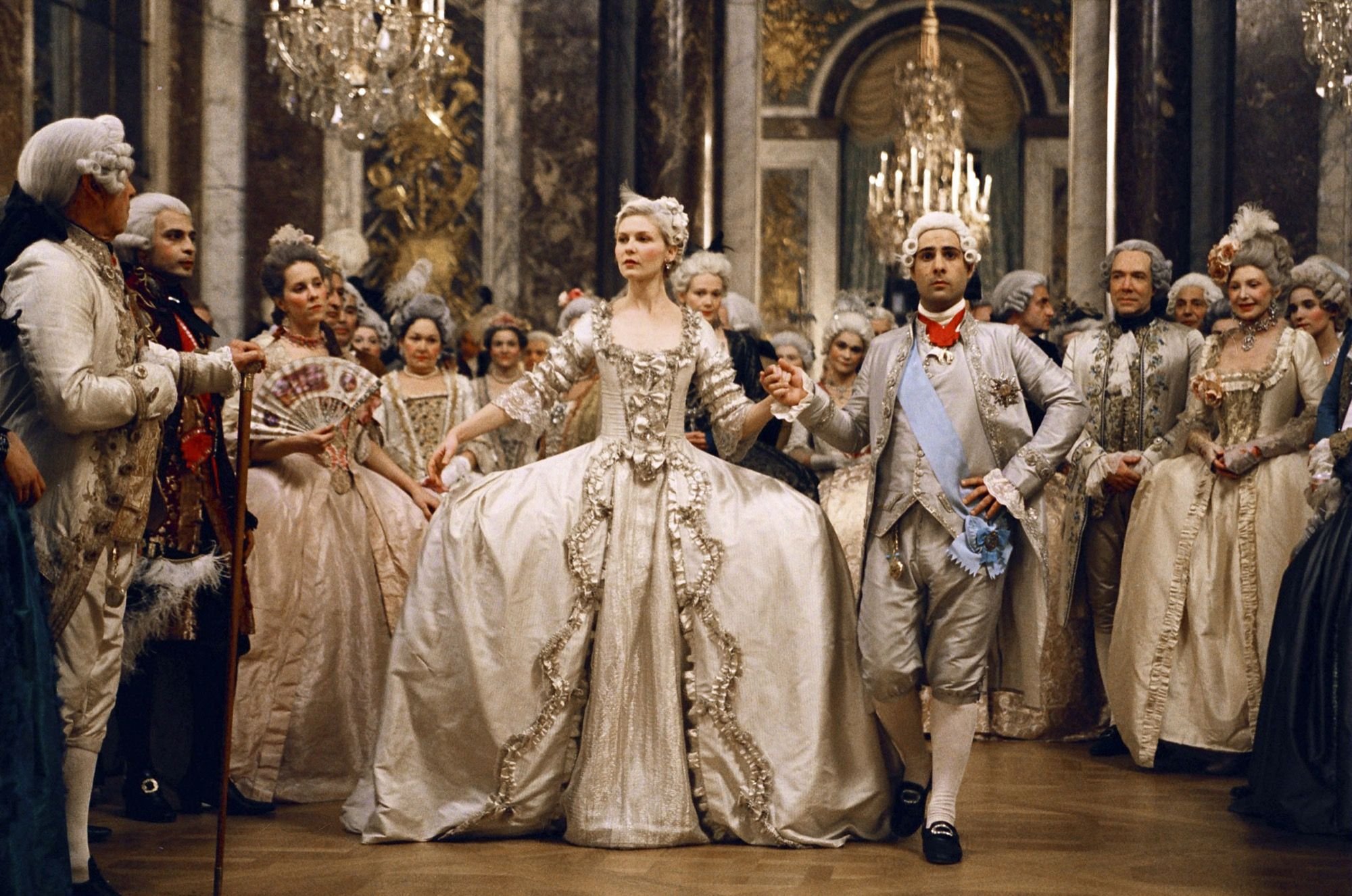
Photo Credit: Sony Pictures / Columbia Pictures
The music adds another layer of mischief. Punk and pop sit alongside period compositions, bringing youthful energy into rooms governed by centuries of etiquette. That contrast helps make the characters’ emotions feel immediate, even when their surroundings seem impossibly distant.
For Pop Culturette, the film also invites a very modern reading: a young woman becomes a public image before she has much opportunity to define herself. Her appearance, marriage, pleasures, and perceived failures become material for other people’s judgments. The distance between the private person and the public figure feels painfully familiar.
Its beauty complicates that story. The luxury is seductive, and the camera lets us enjoy it. Yet the pleasures cannot make the scrutiny disappear or keep the outside world from approaching. Watching the film means feeling both the attraction of that fantasy and the limits of living inside it.
At 20, Marie Antoinette remains a compelling invitation to revisit Coppola’s world: extravagant, intimate, playful, and increasingly melancholy.