
29 Years After Its Premiere, Ally McBeal Still Has Us Talking
By Alexus Mosley

Photo Credit: 20th Television
Twenty-nine years ago today, Ally McBeal walked into a Boston law firm and became one of television’s most talked-about women.
Ally McBeal premiered on Fox on September 8, 1997, introducing viewers to Calista Flockhart’s title character, a young attorney whose professional life was almost constantly colliding with her romantic one. Created by David E. Kelley, the series blended legal drama, romantic comedy, and surreal fantasy in a way that made it feel unlike almost anything else on television at the time.

Photo Credit: 20th Television
Ally was smart and successful, but she was also neurotic, romantic, insecure, and openly consumed by questions about love, marriage, and the life she imagined for herself. At a time when television’s female characters were often expected to represent some larger idea of what a modern woman should be, Ally’s contradictions made her a cultural lightning rod.
The conversation became so big that in 1998, TIME famously put Flockhart on a cover asking whether feminism was dead, placing Ally in a broader debate about what female independence was supposed to look like. Critics questioned whether a successful female lawyer who still desperately wanted romance represented progress or regression.
Nearly three decades later, that debate might be one of the most interesting things about her.
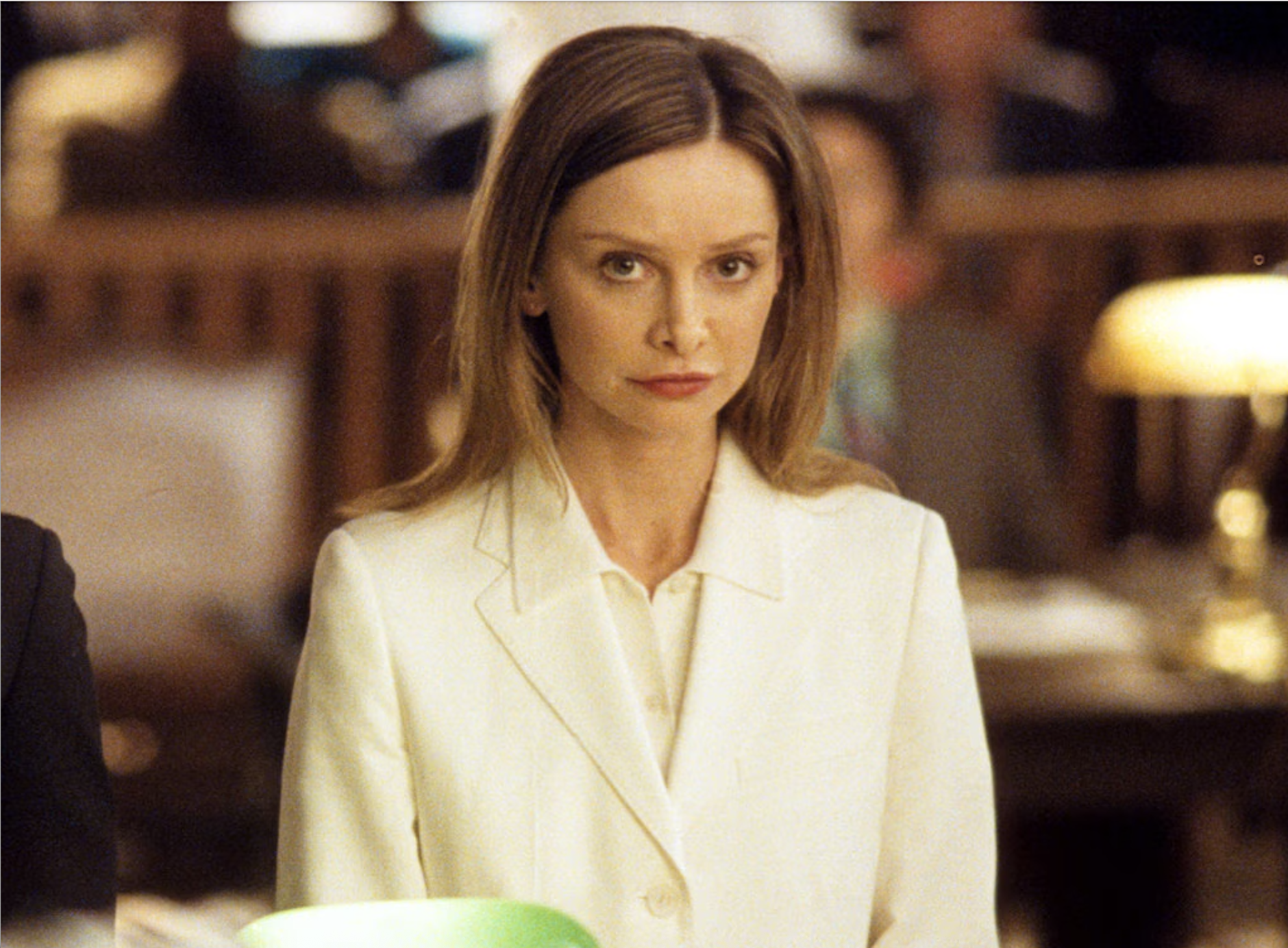
Photo Credit: 20th Television
Ally wasn’t written as an aspirational superwoman who had everything figured out. She could be brilliant in court and a complete mess five minutes later. She wanted professional success and a great love story. She could be selfish, sensitive, funny, irrational, and painfully self-aware, sometimes all in the same episode.
In other words, she was complicated.
The show itself was just as unusual. Ally McBeal became known for visualizing its heroine’s inner life through elaborate fantasy sequences, giving us everything from exaggerated physical transformations to the infamous dancing baby. Kelley later explained that he wanted viewers to see the disconnect between Ally’s outward behavior and what was happening inside her head.
Then there was the world of Cage & Fish. The unisex bathroom became practically a character of its own. Barry White became an unofficial workplace anthem. Court cases regularly veered into the bizarre. And characters like John Cage, Richard Fish, Elaine Vassal and Ling Woo ensured that Ally was hardly the only eccentric person walking through the office.

Photo Credit: 20th Television
The series also developed into a genuine television phenomenon. Ally McBeal eventually won the Emmy for Outstanding Comedy Series in 1999, ending Frasier’s five-year winning streak in the category.
Of course, the fashion helped. Ally’s tiny skirts, fitted jackets, sheer tights and sleek late-’90s minimalism became part of the show’s visual identity. Her wardrobe was frequently discussed alongside her professional credibility, another indication of just how closely Ally McBeal became entangled with conversations about women, femininity and the workplace.
Some aspects of Ally McBeal are unmistakably of their time. Others feel strangely familiar. We are still debating whether female characters have to be likable. We are still dissecting women’s romantic choices as though they reveal something larger about their independence. And television is still fascinated by ambitious women whose personal lives are much messier than their résumés suggest. And maybe that is why the show remains so interesting 29 years later.
Ally McBeal was never the perfect representation of the modern woman. Twenty-nine years later, she remains ambitious, romantic, frustrating, fashionable, vulnerable, and impossible to reduce to one neat idea.
And we’re still talking about her.