
Remember When the Black American Princess Had a Handbook?
By Alexus Mosley
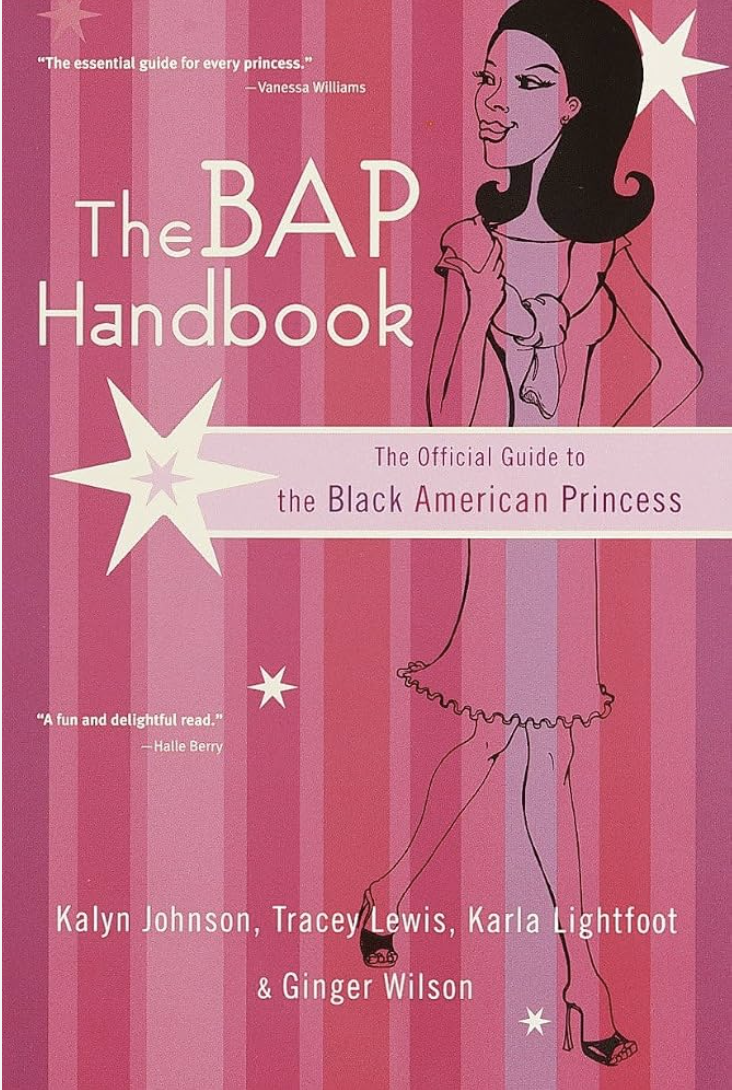
She was polished, privileged, particular, and proudly Black. She had standards, expectations, and a taste for the finer things in life. She was the BAP. The Black American Princess, that is.
And in 2001, she even had her own handbook.
Written by friends Ginger Wilson, Kalyn Johnson, Tracey Lewis and Karla Lightfoot, The BAP Handbook: The Official Guide to the Black American Princess was a pink-covered, tongue-in-cheek manual devoted to a type of Black woman who rarely received this kind of attention in popular culture: one raised with privilege, high expectations and an appreciation for the finer things.
Part satire, part cultural time capsule, the book covered everything from clothes and college to dating, debutante balls and the particular dilemmas that apparently came with being a princess. More than two decades later, some of its references are delightfully Y2K. But behind all the jokes about Prada was a fascinating portrait of a corner of Black American life.
So, What Exactly Was a BAP?
According to the handbook, a Black American Princess was a Black woman from an upper-middle- or upper-class family whose upbringing had accustomed her to, quite simply, “the best and nothing less.”
And the four women writing the definition knew the world firsthand. Wilson was a Chicago attorney and executive director of a legal staffing firm. Johnson was an associate at a large New York law firm. Lightfoot worked as an advertising sales executive in New York, and Lewis was a writer. All four identified themselves as BAPs.
Their princess wasn’t exactly waiting around in a castle for Prince Charming. She was expected to be educated and cared deeply about her appearance. She knew how to navigate certain social circles, traveled, and dated. She shopped (a lot). She understood the importance of family reputation. And, naturally, she had high standards.
Being a Princess Was Serious Business
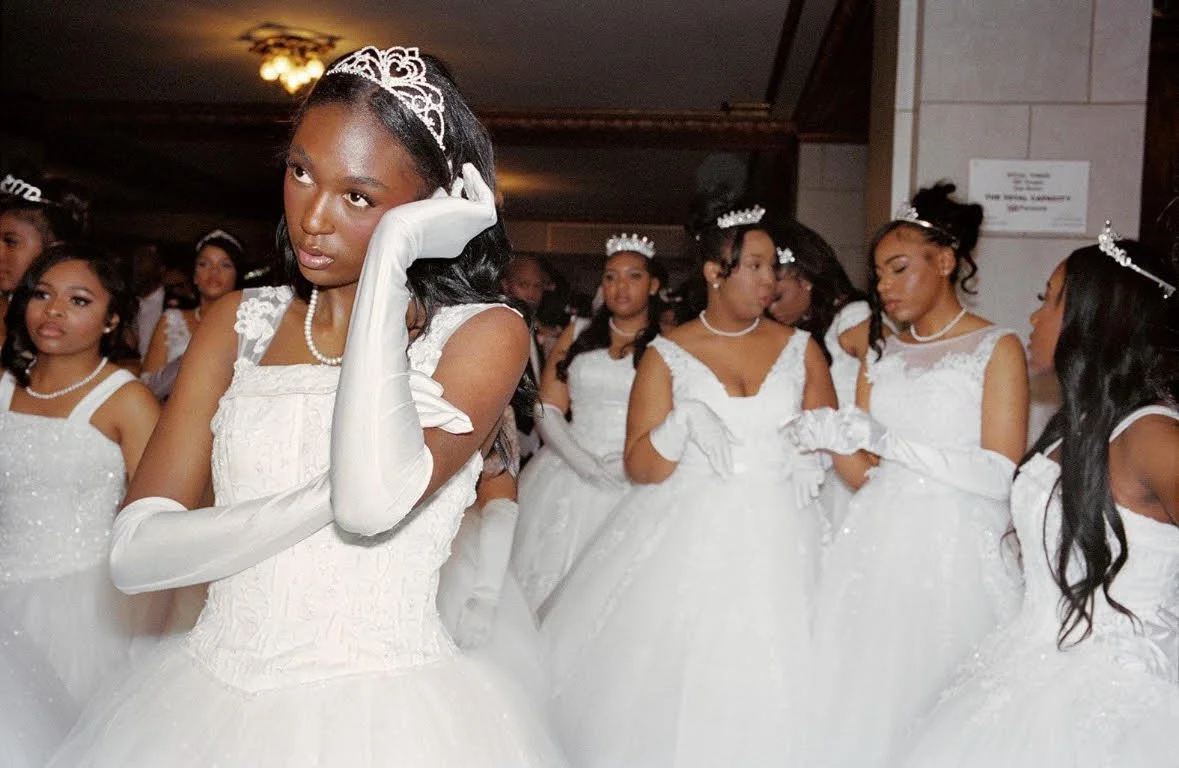
Photo Credit: Miranda Barnes
The joke of The BAP Handbook was just how seriously it treated the business of being a BAP.
The book walks its princess through practically every stage of life. There are sections on childhood, high school, debutante balls, college, graduate school, dating, hair, clothes, and adulthood. One college chapter bears the wonderfully dramatic title, “To Go to College or Not to Go to College? This Is Not a Question for the BAP.”
The book suggested colleges and listed famous BAPs. Alongside the checklists were French phrases as well as lessons on planning the perfect debutante ball and even the crucial matter of cleaning the house before the housekeeper arrived. The humor was intentionally over the top.
An excerpt published by ABC News begins with a newborn BAP entering the world already wondering who will finance her Ivy League education. Ridiculous? Of course. But that was the fun.
But beneath the satire were recognizable elements of Black upper-middle-class culture: education as an expectation, professional achievement, presentation, social organizations, family pride and parents determined to give their children opportunities that previous generations had fought to make possible.
The Black Princess We Didn’t Always Get to See
That’s what makes The BAP Handbook particularly interesting to revisit now.
Popular representations of Black life have historically struggled with class diversity. Black wealth and privilege certainly existed long before 2001, but they weren’t always treated as ordinary parts of Black American life on screen or in mainstream publishing.
The BAP Handbook wasn’t introducing affluent Black America to existence. It was poking fun at a world that already existed. It also wasn’t particularly interested in making its princess universally relatable. This was a woman who might participate in a debutante ball, have parents with professional careers, consider certain colleges practically predetermined, and know precisely what was expected of her when she entered particular rooms.
Even the authors’ own backgrounds complicated simplistic ideas about what Black success was supposed to look like. In a 2001 interview, Johnson joked about being the one author who attended public school, although hers in affluent Bloomfield Hills, Michigan came with swimming pools, tennis courts and acres of green space. The BAP could be spoiled, certainly. But she could also be ambitious, as those things aren’t mutually exclusive.
Not Everyone Wanted to Crown Her
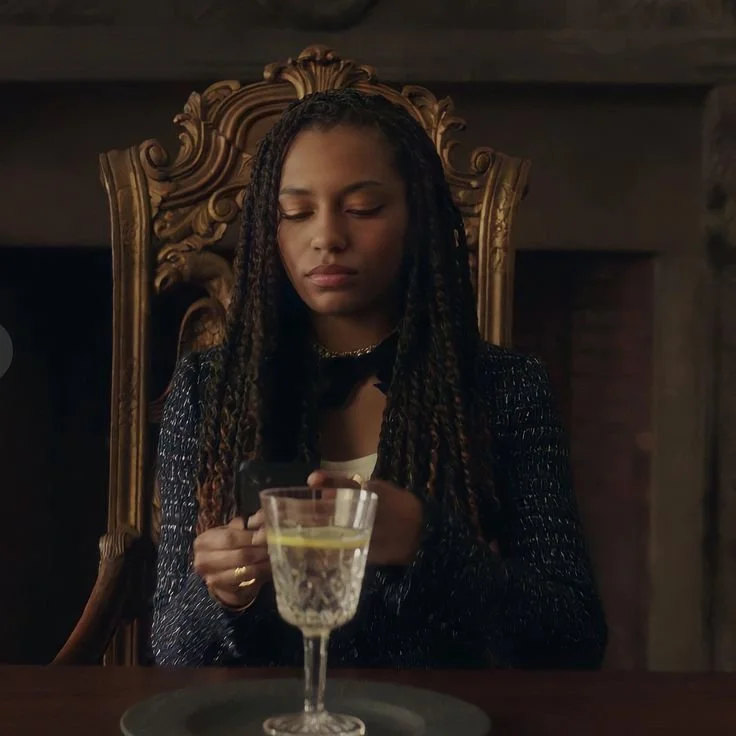
Photo Credit: HBO Max
Of course, a book drawing distinctions based on class within Black America was never going to escape criticism. The BAP Handbook was criticized by some readers as elitist and for appearing to celebrate values that critics characterized as “white.” The authors rejected that interpretation. Lewis argued that the values reflected in the book came from their own Black parents, families, and friends. She also stressed that the book wasn’t intended to be a serious sociological treatise.
That debate may actually make the book more interesting as a cultural artifact. Who gets to define an authentically Black life? Does wealth make a Black experience less representative of Black culture? What happens when access to elite education, country clubs, expensive clothes, or domestic help enters the picture?
Perhaps most importantly, why would ambition, education, etiquette, or an appreciation for luxury become less Black simply because white affluent families valued some of the same things?
The BAP wasn’t intended to represent every Black woman but a Black woman. That distinction was clear.
The BAP Wasn’t All Birkin Bags and Blowouts
It’s also easy to miss the generational story hiding beneath the satire. For many affluent Black families, arriving in these spaces carried a history different from that of their white counterparts. The professional careers, college degrees, homes and social institutions enjoyed by one generation often existed because generations before them had pushed against restrictions designed specifically to keep Black Americans out. So the BAP’s privilege could exist alongside a very Black understanding of achievement.
The book’s own collection of “BAP legends” stretched the archetype far beyond contemporary socialites. Its examples included women such as Marian Anderson, Zora Neale Hurston, Sojourner Truth and Harriet Tubman, alongside more contemporary figures including Diahann Carroll and Ruth Simmons.
That choice tells us something. The “princess” label may have been playful, but the ideal underneath it wasn’t simply a woman with an expensive wardrobe. She was a Black woman who knew her worth.
Twenty-Five Years Later, the BAP Feels Surprisingly Familiar
The vocabulary has changed considerably since 2001. We don’t hear “BAP” nearly as often anymore. The pink handbook belongs unmistakably to another era, right down to its references to shopping, beauty and the social codes of the early aughts.
But has the Black American Princess really disappeared?
Look around. There are still Black girls being raised with extremely high educational expectations and many Black debutante balls and generations-old social traditions. There are still women who love luxury without considering it incompatible with their Blackness. There are still daughters whose parents expect excellence while simultaneously reminding them that they deserve the very best life has to offer.
Today, she might call it living softly. She might post her vacations instead of documenting them in a diary. Her favorite labels may have changed. Her beauty routine certainly has. But we’d still recognize her.
Maybe that’s what makes The BAP Handbook worth remembering.
Beneath the satire, shopping references and unapologetic princess behavior was something rather sweet: four Black women having enough familiarity with their own world to laugh about it.
In 2001, the Black American Princess wasn’t asking permission to enjoy a beautiful life. She was simply wondering why everyone else hadn’t gotten the handbook.
The Woman Behind the First Black Barbie: Kitty Black Perkins' Lasting Legacy